
Navneet: a community based intervention on postpartum maternal and infant care
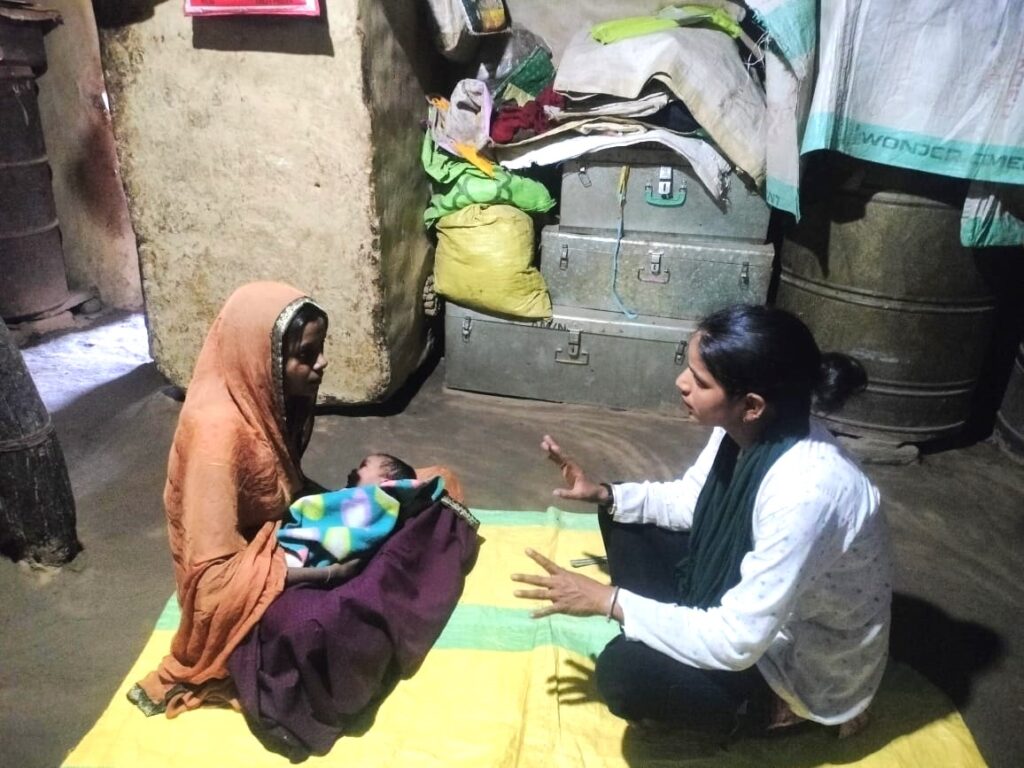
Introduction The year after childbirth brings numerous challenges for both women and infants. Women experience physical recovery, manage childcare responsibilities, deal with uncertain fertility patterns, and face economic pressures. Infants, particularly those born with low birth weight, are highly dependent on their caregivers, undergoing rapid growth and development while also facing increased risks of illness and mortality. In rural-tribal communities of Southern Rajasthan, ARTH survey of postpartum women found a significant prevalence of maternal anemia. Postpartum contraception presents further complexities due to unpredictable fertility return and breastfeeding’s impact on contraceptive safety. Current efforts focus mainly on providing long-acting methods like Copper-T immediately after childbirth. Additionally, postpartum depression affects many women, with 15.8% of those studied by ARTH experiencing it within 6–8 weeks of delivery. To address these gaps in postpartum care, ARTH introduced the Navneet intervention with the goal to improve the health outcomes of both mothers and infants in these rural communities. Objectives of the intervention:: The Navneet Intervention is being implemented in 4 blocks of Ud aipur and Rajsamand districts, with an estimated population of 5 lakhs, focusing on rural-tribal communities of Southern Rajasthan. The intervention follows a continuum of care model, extending from pregnancy through to one year postpartum. It involves multiple interactions with women during the postpartum period, including home visits by community mobilizers, phone calls from call center counselors, and subsidized routine clinic visits. The intervention focuses on following key areas: Key activities Timeline: Results: No. of villages covered 247 Estimated population 314,602 No of births/thousand (@20/yr) 6292 No. of women registered 4094 (65.1%) No. of women contacted at least once after delivery 3286 (80.3%)
Drought relief initiative in Kadiya area (2001-02)

To prevent malnutrition deaths among children in the year 2000 drought, ARTH provided formulations of a locally made nutrition supplement to the children, especially to malnourished children free of cost.
Taruni: Empowering young women to gain control of their fertility (2015 onwards)

Location and population coverage: Taruni is being implemented across 8 clusters covering a population of 5,50,000 in 479 villages of Udaipur and Rajsamand districts. Each cluster covers 35,000 – 50,000 population and is mobilised by community mobilisers or Taruni Preraks, who select, train and support entrepreneurs at village level to serve 700-1000 persons. Introduction: Lack of access among poorer young women to information, counseling and services for reproductive health underlies low use and high unmet need for contraception. This lacuna is compounded whenever they face uncertainty and anxiety about becoming pregnant. Preventing or dealing with unwanted pregnancy often entails psychological or social costs, which when coupled with the inability to seek information or calmly take informed decisions, can lead to avoidable stress and non-use of services among young women. The Taruni intervention is being implemented by Action Research & Training for Health (ARTH) since Dec 2014. It enables women to readily self-assess their pregnancy status, seek information and commodities from neighbourhood entrepreneurs, consult a telephone helpline, and easily access RH counseling and services at primary care clinics backed by escorted referral to specialists. All these interventions aim to enable reproductive choice and greater adoption of contraceptives and other reproductive health services, on the part of young women aged up to 30 years. The 1st phase was implemented in a population of 1,80,000, the 2nd phase scaled intervention across 2 1⁄2 blocks, and the 3rd phase is being implemented in 5 blocks which utilises field experience as a platform for communicating and advocating the safeguarding of choice and reproductive rights within India’s Family Planning Program. Activities: Taruni ‘dukaan’ – products available with a Taruni Sakhi
RituCupTM : an all weather option for women

RituCupTM: an all weather option for women Various agencies and governments have been running information campaigns and promoting the distribution of sanitary pads, especially among school-going adolescent girls. However, supplies of sanitary pads through schools and village anganwadis have been periodic. The erratic nature of free supplies can lead to irregular use or necessitate purchase from the market — the cheapest pads cost Rs 25-30 per month’s supply. While adolescent girls have been a priority, we at ARTH wondered about young rural and marginalized women in the tribal districts where we work — how did they manage, especially since no agency seemed to focus on their menstrual hygiene? We conducted a formative study of 61 young (20-35 years) women in villages of tribal southern Rajasthan in 2018, and discovered that the majority were continuing with locally purchased red cloth (laal kapda) purchased for Rs 40-50 from local shops, washed and dried in hidden places, and reused each month till they wore out, which was generally after 4-6 months. About 5-10% women did use disposable sanitary pads, especially if they had to travel during a period. Those using home-washed cloth pads complained of frequent leakage and staining from poor absorbency, suffered sticky discomfort (especially during summer) that made walking difficult, and were unable to travel to another town or the market. Some women said that during the monsoons when they had to work in the fields, a heavy shower could soak their clothes and if that happened during a period, the stains would embarrassingly be visible to all. Even women using pads had to carefully tiptoe out of the house unseen, to dispose of them after use — it turned out that disposing pads in villages was neither easy nor anonymous. Launch of ARTH’s RituCupTM On 11 July 2019 (World Population Day) Action Research & Training for Health (ARTH) launched RituCupTM — a reusable menstrual cup made of medical grade silicone, that could be used for up to 10 years. At a large gathering of about 500 women from villages and a few urban localities of Udaipur and Rajsamand districts of Rajasthan, two women – Prof Vinaya Pendse, Retired Head, Department of Obstetrics and Gynecology, RNT Medical College, Udaipur and Ms Usha Dangi, Deputy Pradhan, Block Panchayat Badgaon, District Udaipur, formally inaugurated the menstrual cup and called on assembled women to help improve menstrual hygiene practices in the districts. RituCup, positioned as a reliable menstrual hygiene option, was initially made available for Rs 250 a piece by about 600 Taruni Sakhis, ARTH’s Community Health Entrepreneurs (CHEs) scattered across 530 odd villages and urban wards of three rural blocks and Udaipur city. All CHEs were trained to educate and support women through the initial 1-2 periods while they learned to use RituCup. Women were also offered the option of contacting a toll-free number to a day time call centre, for information and support as needed. Progress ARTH’s RituCup has gained rapidly in popularity, with 7,924 cups having been purchased by women in the field area as of April 2025. Women reported improved functional efficiency and mobility offered by the cup. “I can jump, dance while using the cup and can go anywhere without fear of staining…”(26 year old woman, completed primary school, married, 2 children).Being able to manage periods in a private and dignified manner was the basic requirement women talked about and menstrual cup fulfilled this requirement by maintaining privacy. “I do not even feel I am on my periods. So, I really like the cup and use it every month. It feels like every day is the same” (sabhi din ek sarikha lage) (31-year-old woman, completed secondary school, married, 2 children). To view communication materials on RituCup, click here To view a short video film(Hindi, 3 minutes) on RituCup, click here For more information on RituCup, contact arth@arth.in To view a video film about ARTH, go to: https://www.youtube.com/watch?v=NnLtvrNlmRs
Evidence based advocacy for maternal and neonatal health (2007-2014)

ARTH undertook evidence-based advocacy for maternal-neonatal health (including safe abortion) across the seven divisions of Rajasthan state, using a gender, rights and health systems approach, in collaboration with the Department of Medical Health and Family Welfare Services, Government of Rajasthan. The focus of ARTH’s advocacy efforts emerged from the various research studies that it had conducted. One of these was a qualitative study on neonatal care and childbirth practices at home and institutions, another was a quantitative survey of delivery practices, and there were 2 verbal autopsy studies for maternal deaths. These studies had thrown light on very crucial issues, including quality of delivery services, referral mechanisms, timing of discharge, costs of services and immediate neonatal and maternal care at home and in institutions. As a part of this advocacy, various activities were carried out:
SAMPARK – To improve the referral system and emergency obstetric care services (2015-2018)

Places of operation/activity: District Population covered Bharatpur 25,48,462 Chittorgarh 15,44,338 Sawai Madhopur 13,35,551 Introduction: Maternal death is defined as “The death of a woman while pregnant or within 42 days of termination of pregnancy, irrespective of the duration and the site of the pregnancy, from any cause related to or aggravated by the pregnancy or its management, but not from accidental or incidental causes. The top causes of maternal deaths are: postpartum bleeding, complications from unsafe abortion, hypertensive disorders of pregnancy, postpartum infections and obstructed labour. Most maternal deaths are avoidable, as the healthcare solutions to prevent or manage complications are well known. Improving access to antenatal care in pregnancy, skilled care during childbirth, and care and support in the weeks after childbirth will reduce maternal deaths significantly. Situation Analysis: Rajasthan is a state with a population of 6,85,48,437, 75% of which is rural (Census 2011), and had a high maternal mortality ratio of 255 per lakh live births (SRS 2010-12). Even though the health facilities had increased in number there was no consequent decrease in Maternal Mortality Ratio. The government system provides the bulk of maternal health services. Although the service infrastructure had improved in stages, the availability of maternal health services in rural areas remains poor because of low availability of human resources, especially midwives and clinical specialists, and their non-residence in rural areas. Various national programmes, such as the Family Planning, Child Survival and Safe Motherhood and Reproductive and Child Health, had attempted to improve maternal health; however, they had not made the desired impact either because of an earlier emphasis on ineffective strategies, slow implementation as reflected in the poor use of available resources, or lack of effective ground-level governance, as exemplified by the widespread practice of informally charging users for free services. The availability of safe abortion services is limited, resulting in a large number of informal abortion service providers and unsafe abortions, especially in rural areas. The Janani Suraksha Yojana provides an opportunity to improve maternal and neonatal health, provided the quality issues can be adequately addressed. After the implementation of Jannani Suraksha Yojna there was a 3 fold rise in institutional deliveries but MMR had not declined appreciably. The possible reason could be the poor referral system in the state. According to a review of maternal deaths in Rajasthan in 2012, 22% of maternal deaths occurred in vehicles while 65% in hospitals. Interventions At the community level: Orientation of ASHAs was carried out by 4 ARTH representatives in Chittorgarh = 11, Bharatpur = 10 and Sawai Madhopur = 8. IEC materials were distributed among the ASHAs to impart knowledge in the community regarding complications during pregnancy and some case studies from a previous project called PARIJAAT were also distributed to assess the knowledge of the ASHAs regarding maternal complications. By the end of 31st March 2016 following are the key achievements under the project: A total of 2,617 patients were helped through the intervention,out of which 705 were directly helped and 1,912 were helped through the four operating call centers. Of the total of 2617 patients benefited through the Sampark Intervention, 2,014 (78%) were discharged after referral care whereas a 193 (7.4%) cases were further referred to the higher healthcare facilities. There was a healthy number of patients, who were alive after the emergency maternal obstetric care, at 2,103 amounting to 80.4%. The combined number of deaths at the time of exit for all the four intervention areas was 55 whereas the outcome after 28/42 days of completion of the intervention, the combined death figure was 108.
Strengthening Pre-service Nursing and Midwifery Education in Udaipur Division of Rajasthan (2011-2014)

ARTH in partnership with UNFPA and Department of Medical, Health and Family Welfare, Government of Rajasthan worked to strengthen pre-service education for nursing and midwifery cadres in 5 districts of Udaipur zone in the state of Rajasthan. The project covers 5 ANM and 2 GNM training centres at Banswara, Dungarpur, Chittorgarh, Rajsamand and Udaipur and aimed to improve the educational and clinical skills of nursing faculties of ANM/GNM training centres and strengthen attached clinical practice site by upgrading the clinical training capacity of the service providers. ARTH named the initiative as “Kushal project”, meaning a project to improve training and clinical skills. A Quality Improvement (QI) team conducted the baseline survey covering 5 broad areas viz. This was done according to allotted standards and gaps were identified within the training facilities. After identification of gaps, separate action plans were developed at the three levels viz. school, district and state level. Results: The project findings indicated marked improvement in the teaching methodology with improved infrastructure in terms of skill-labs, computer labs and library facilities. Additionally clinical practices in service sites showed considerable improvement followed by better maintenance of records both at the teaching and non-teaching levels.
School of Midwifery Practice & Training in Primary Health Care (2007 onwards)

ARTH has been working as a technical resource agency since 1997. It has periodically conducted training courses for government ANMs, doctors, and programme managers of NGOs. Since 2007, ARTH has consolidated its role of providing technical assistance and training by establishing the School of Midwifery Practice & Training in Primary Health Care. The broad objective of the school is to equip primary health service providers, managers and organizers from the non-profit and government sectors, including ARTH’s field team to improve the delivery and utilisation of primary health services in rural Rajasthan. ARTH has expanded its training infrastructure and faculty. A training centre has been constructed 20 kms from Udaipur city. In order to facilitate training of various levels of personnel, ARTH has developed a variety of training materials, such as a facilitator guide for trainers of nurse-midwives on maternal – newborn care and several pictorial materials for village level health workers/ASHAs. Training programmes have been held for various cadres of people working on reproductive and child health issues – senior NGO managers, doctors, programme supervisors, nurse midwives, village health workers and their trainers etc. Since its inception in 2007, the school has trained 412 SBA trainers from various parts of Rajasthan (these include nursing tutors from ANM and GNM training centers, staff nurses from teaching hospitals, labour room in-charge from district hospitals/ CHCs/ referral hospitals). In 2009-10 we conducted a training of nurses (on issues of contraception, RTI/STI, breast & pelvic examination, safe abortion, infection prevention, IMNCI) from 3 NGOs of Rajasthan that are running rural health centres. We conducted 2 training programmes on reproductive rights and safe abortion in which 59 field level supervisors from 31 NGOs participated. We also conducted an orientation-training course on primary health for the field supervisors of 2 NGOs, one of whom ARTH provided technical support to implement health interventions in its field area. Young men and women living in the rural-tribal interiors rarely get to enter medical and nursing schools, hence health care in these areas is delivered largely by “outsiders” that are reluctant to live and work in a marginalised area. Yet the health needs of these areas tend to be greater than average. Recognising this, in 2016, ARTH launched training of “Skilled Health Assistants” with a first batch of 9 locally resident school educated women enrolling for an intensive 3 month course to become Midwifery Assistants and counsellors. The course curriculum was meticulously designed and delivered by the experienced nurse-midwives and doctors making use of experiential learning methods, training aids and practical demonstrations through dummies and bedside training. After a rigorous examination, 8 students were declared successful and assigned to the two rural health centers by rotation. As of September 2024, we have successfully trained ___ SHAs, some of whom work in ARTH’s three health centres and others have moved on to other professions.
Strengthening government efforts to implement the MTP Act in districts of Rajasthan (2007 onwards)

ARTH is one of the eight members of the Consortium for Safe Abortion in India, which works towards increasing access to legal, safe and comprehensive abortion care services in the public health system, focusing on the rural poor. In October 2006, ARTH worked with the Medical, Health and Family Welfare Department, Rajasthan to “assist it on systemic, resource, administrative and legal issues to increase access to safe and legal abortions in the public and private sectors”. Data was collected from all the districts of the State to review the status of implementation of the MTP Act in the districts. Data on MTP certification process, MTP reporting, currently available MTP trained providers, functioning of the district level MTP committee and status of PCPNDT implementation was collected. The collected data was used to plan measures along with the State government to improve access to safe abortion services within the provisions of the MTP Act. Data from April 2007 to March 2010 was collected, compared and documented, and shared with the Department of Medical Health & Family Welfare, Government of Rajasthan. An MIS for reporting about MTPs at district level and from district to state headquarters was developed. Besides supporting and advocating with the government sector, we did a series of workshops with NGOs. Till March 2010, 3 residential trainings and 5 one-day trainings with local NGOs were conducted. We prepared a series of posters, brochures and a documentary film on the issue of safe abortion and sex selection to strengthen the advocacy campaign.
Establishing a system for reviewing maternal deaths, using verbal autopsy technique in Udaipur district of Rajasthan (2007-08)

The District RCH Society of Udaipur in collaboration with ARTH undertook a study to establish a system for identification and review of maternal deaths. The Medical, Health and Family Welfare Department, Udaipur conducted verbal autopsies of maternal deaths in two blocks of the district. At the same time ARTH conducted verbal autopsies in two other blocks of the district using a “gold standard” method that picks up all maternal deaths in the study area during a given time period. The study was carried out from December 2006 to November 2007. The MAPEDI questionnaire (UNICEF’s questionnaire for Maternal Perinatal Death Inquiry) was used to conduct the verbal autopsies. These two study approaches were adopted in roughly equal populations across the four blocks — in the blocks covered by the health department, which relied on the civil registration system, 9 deaths were picked up, while 57 deaths were picked up in the blocks covered by ARTH, which relied on a range of key informants, e.g. ASHAs, ANMs, Anganwadi workers. In the data collected by ARTH, 36% women died at home, 41% died in a health facility, while 19% died during transport. 16% women died during pregnancy, 18% due to abortion related causes and maximum 66% died in the post-partum period. Among key informants, maximum maternal deaths were reported by village level female workers – ASHA, Anganwadi worker, Anganwadi sahayika.