
ARTH has been working as a technical resource agency since 1997. It has periodically conducted training courses for government ANMs, doctors, and programme managers of NGOs. Since 2007, ARTH has consolidated its role of providing technical assistance and training by establishing the School of Midwifery Practice & Training in Primary Health Care. The broad objective of the school is to equip primary health service providers, managers and organizers from the non-profit and government sectors, including ARTH’s field team to improve the delivery and utilisation of primary health services in rural Rajasthan.
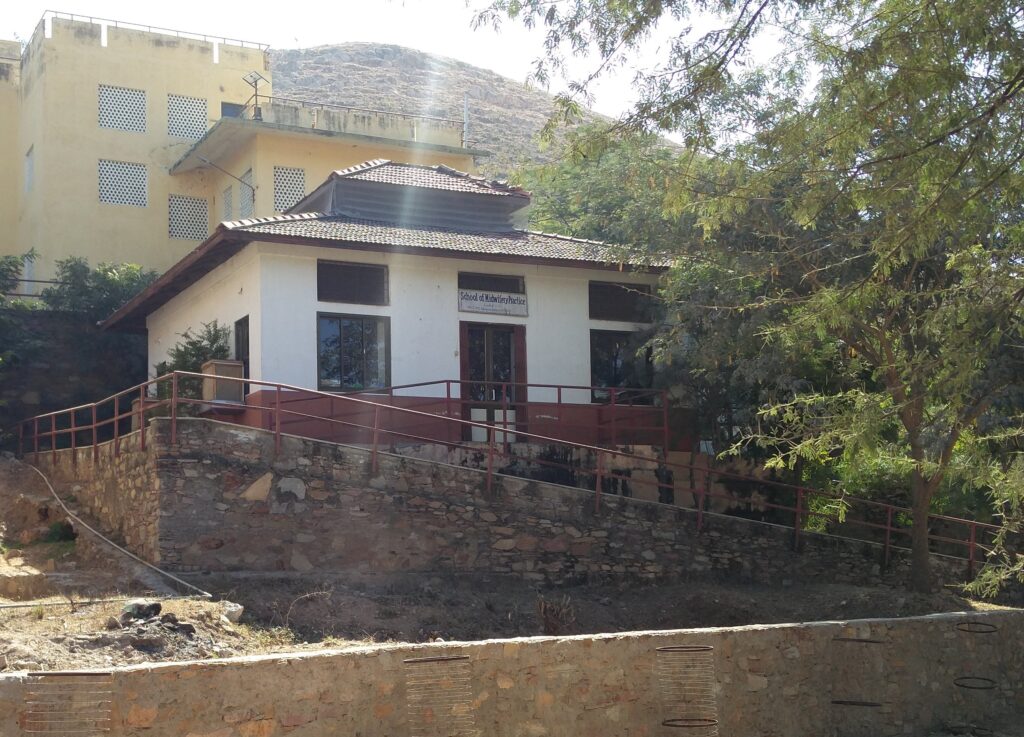
ARTH has expanded its training infrastructure and faculty. A training centre has been constructed 20 kms from Udaipur city. In order to facilitate training of various levels of personnel, ARTH has developed a variety of training materials, such as a facilitator guide for trainers of nurse-midwives on maternal – newborn care and several pictorial materials for village level health workers/ASHAs.
Training programmes have been held for various cadres of people working on reproductive and child health issues – senior NGO managers, doctors, programme supervisors, nurse midwives, village health workers and their trainers etc. Since its inception in 2007, the school has trained 412 SBA trainers from various parts of Rajasthan (these include nursing tutors from ANM and GNM training centers, staff nurses from teaching hospitals, labour room in-charge from district hospitals/ CHCs/ referral hospitals).
In 2009-10 we conducted a training of nurses (on issues of contraception, RTI/STI, breast & pelvic examination, safe abortion, infection prevention, IMNCI) from 3 NGOs of Rajasthan that are running rural health centres. We conducted 2 training programmes on reproductive rights and safe abortion in which 59 field level supervisors from 31 NGOs participated. We also conducted an orientation-training course on primary health for the field supervisors of 2 NGOs, one of whom ARTH provided technical support to implement health interventions in its field area.
Young men and women living in the rural-tribal interiors rarely get to enter medical and nursing schools, hence health care in these areas is delivered largely by “outsiders” that are reluctant to live and work in a marginalised area. Yet the health needs of these areas tend to be greater than average. Recognising this, in 2016, ARTH launched training of “Skilled Health Assistants” with a first batch of 9 locally resident school educated women enrolling for an intensive 3 month course to become Midwifery Assistants and counsellors. The course curriculum was meticulously designed and delivered by the experienced nurse-midwives and doctors making use of experiential learning methods, training aids and practical demonstrations through dummies and bedside training. After a rigorous examination, 8 students were declared successful and assigned to the two rural health centers by rotation. As of September 2024, we have successfully trained ___ SHAs, some of whom work in ARTH’s three health centres and others have moved on to other professions.