
Navneet: a community based intervention on postpartum maternal and infant care
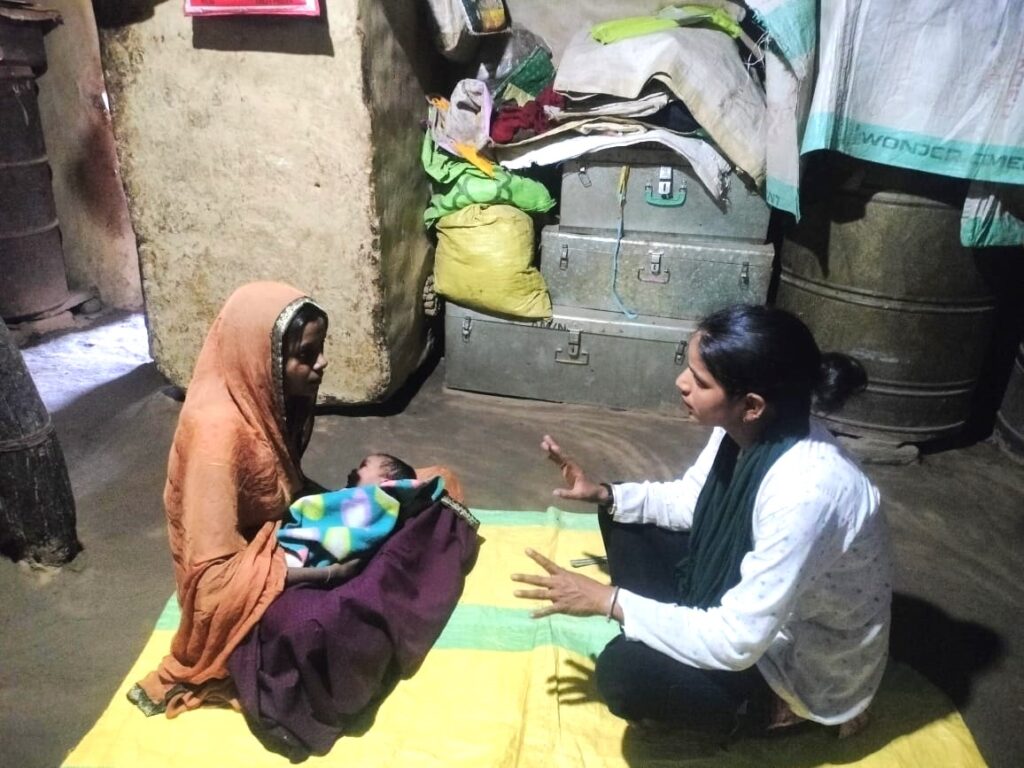
Introduction The year after childbirth brings numerous challenges for both women and infants. Women experience physical recovery, manage childcare responsibilities, deal with uncertain fertility patterns, and face economic pressures. Infants, particularly those born with low birth weight, are highly dependent on their caregivers, undergoing rapid growth and development while also facing increased risks of illness and mortality. In rural-tribal communities of Southern Rajasthan, ARTH survey of postpartum women found a significant prevalence of maternal anemia. Postpartum contraception presents further complexities due to unpredictable fertility return and breastfeeding’s impact on contraceptive safety. Current efforts focus mainly on providing long-acting methods like Copper-T immediately after childbirth. Additionally, postpartum depression affects many women, with 15.8% of those studied by ARTH experiencing it within 6–8 weeks of delivery. To address these gaps in postpartum care, ARTH introduced the Navneet intervention with the goal to improve the health outcomes of both mothers and infants in these rural communities. Objectives of the intervention:: The Navneet Intervention is being implemented in 4 blocks of Ud aipur and Rajsamand districts, with an estimated population of 5 lakhs, focusing on rural-tribal communities of Southern Rajasthan. The intervention follows a continuum of care model, extending from pregnancy through to one year postpartum. It involves multiple interactions with women during the postpartum period, including home visits by community mobilizers, phone calls from call center counselors, and subsidized routine clinic visits. The intervention focuses on following key areas: Key activities Timeline: Results: No. of villages covered 247 Estimated population 314,602 No of births/thousand (@20/yr) 6292 No. of women registered 4094 (65.1%) No. of women contacted at least once after delivery 3286 (80.3%)
Taruni: Empowering young women to gain control of their fertility (2015 onwards)

Location and population coverage: Taruni is being implemented across 8 clusters covering a population of 5,50,000 in 479 villages of Udaipur and Rajsamand districts. Each cluster covers 35,000 – 50,000 population and is mobilised by community mobilisers or Taruni Preraks, who select, train and support entrepreneurs at village level to serve 700-1000 persons. Introduction: Lack of access among poorer young women to information, counseling and services for reproductive health underlies low use and high unmet need for contraception. This lacuna is compounded whenever they face uncertainty and anxiety about becoming pregnant. Preventing or dealing with unwanted pregnancy often entails psychological or social costs, which when coupled with the inability to seek information or calmly take informed decisions, can lead to avoidable stress and non-use of services among young women. The Taruni intervention is being implemented by Action Research & Training for Health (ARTH) since Dec 2014. It enables women to readily self-assess their pregnancy status, seek information and commodities from neighbourhood entrepreneurs, consult a telephone helpline, and easily access RH counseling and services at primary care clinics backed by escorted referral to specialists. All these interventions aim to enable reproductive choice and greater adoption of contraceptives and other reproductive health services, on the part of young women aged up to 30 years. The 1st phase was implemented in a population of 1,80,000, the 2nd phase scaled intervention across 2 1⁄2 blocks, and the 3rd phase is being implemented in 5 blocks which utilises field experience as a platform for communicating and advocating the safeguarding of choice and reproductive rights within India’s Family Planning Program. Activities: Taruni ‘dukaan’ – products available with a Taruni Sakhi
RituCupTM : an all weather option for women

RituCupTM: an all weather option for women Various agencies and governments have been running information campaigns and promoting the distribution of sanitary pads, especially among school-going adolescent girls. However, supplies of sanitary pads through schools and village anganwadis have been periodic. The erratic nature of free supplies can lead to irregular use or necessitate purchase from the market — the cheapest pads cost Rs 25-30 per month’s supply. While adolescent girls have been a priority, we at ARTH wondered about young rural and marginalized women in the tribal districts where we work — how did they manage, especially since no agency seemed to focus on their menstrual hygiene? We conducted a formative study of 61 young (20-35 years) women in villages of tribal southern Rajasthan in 2018, and discovered that the majority were continuing with locally purchased red cloth (laal kapda) purchased for Rs 40-50 from local shops, washed and dried in hidden places, and reused each month till they wore out, which was generally after 4-6 months. About 5-10% women did use disposable sanitary pads, especially if they had to travel during a period. Those using home-washed cloth pads complained of frequent leakage and staining from poor absorbency, suffered sticky discomfort (especially during summer) that made walking difficult, and were unable to travel to another town or the market. Some women said that during the monsoons when they had to work in the fields, a heavy shower could soak their clothes and if that happened during a period, the stains would embarrassingly be visible to all. Even women using pads had to carefully tiptoe out of the house unseen, to dispose of them after use — it turned out that disposing pads in villages was neither easy nor anonymous. Launch of ARTH’s RituCupTM On 11 July 2019 (World Population Day) Action Research & Training for Health (ARTH) launched RituCupTM — a reusable menstrual cup made of medical grade silicone, that could be used for up to 10 years. At a large gathering of about 500 women from villages and a few urban localities of Udaipur and Rajsamand districts of Rajasthan, two women – Prof Vinaya Pendse, Retired Head, Department of Obstetrics and Gynecology, RNT Medical College, Udaipur and Ms Usha Dangi, Deputy Pradhan, Block Panchayat Badgaon, District Udaipur, formally inaugurated the menstrual cup and called on assembled women to help improve menstrual hygiene practices in the districts. RituCup, positioned as a reliable menstrual hygiene option, was initially made available for Rs 250 a piece by about 600 Taruni Sakhis, ARTH’s Community Health Entrepreneurs (CHEs) scattered across 530 odd villages and urban wards of three rural blocks and Udaipur city. All CHEs were trained to educate and support women through the initial 1-2 periods while they learned to use RituCup. Women were also offered the option of contacting a toll-free number to a day time call centre, for information and support as needed. Progress ARTH’s RituCup has gained rapidly in popularity, with 7,924 cups having been purchased by women in the field area as of April 2025. Women reported improved functional efficiency and mobility offered by the cup. “I can jump, dance while using the cup and can go anywhere without fear of staining…”(26 year old woman, completed primary school, married, 2 children).Being able to manage periods in a private and dignified manner was the basic requirement women talked about and menstrual cup fulfilled this requirement by maintaining privacy. “I do not even feel I am on my periods. So, I really like the cup and use it every month. It feels like every day is the same” (sabhi din ek sarikha lage) (31-year-old woman, completed secondary school, married, 2 children). To view communication materials on RituCup, click here To view a short video film(Hindi, 3 minutes) on RituCup, click here For more information on RituCup, contact arth@arth.in To view a video film about ARTH, go to: https://www.youtube.com/watch?v=NnLtvrNlmRs
ARTH launches Mukti (2016 onwards)
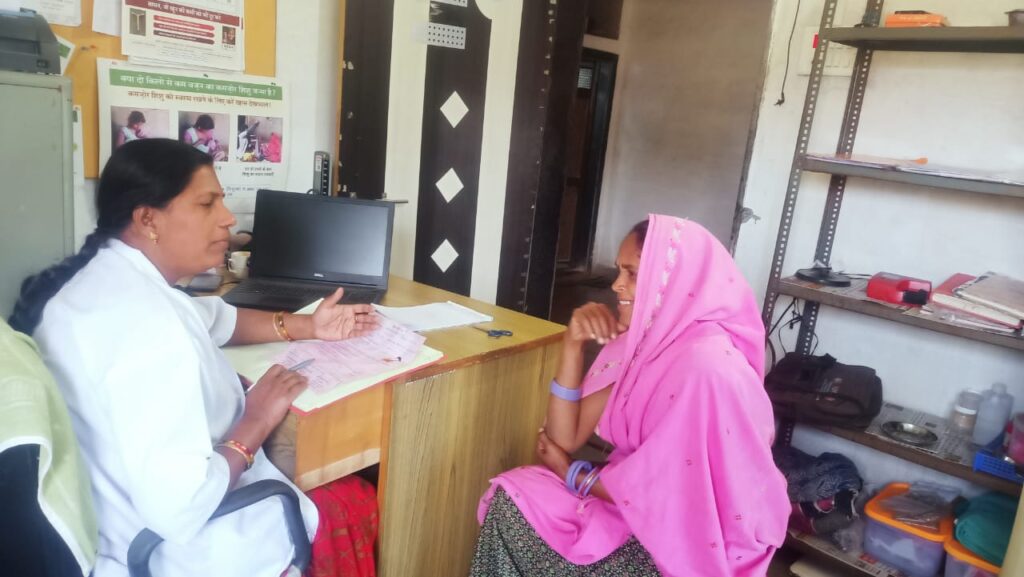
In June 2016, ARTH launched “Mukti”, a long acting reversible contraceptive (LARC) for women of low economic status in a population of 200,000 in Udaipur city and in villages of three blocks of southern Rajasthan. Mukti was introduced as part of the Taruni intervention which addressed the reproductive health needs of the young women in Udaipur & Rajsamand districts. The contraceptive is a hormone impregnated intra-uterine device that however contains no copper, but instead continuously releases a calibrated dose of progesterone hormone for 7 years. Hence the Mukti “Levonorgestrel Intrauterine System” prevents pregnancy for up to 7 years. The great advantage of Mukti is that it significantly reduces menstrual blood loss, hence women suffering from heavy menstrual bleeding can get relief from the same. Besides, women adopting Mukti are expected to suffer less anemia because of reduced blood loss. Women of the area (encouraged by some doctors and other health providers) commonly but erroneously believe that heavy menstrual bleeding could be a warning of cancer. Hence after they have had children, older (30 years and above) women are often persuaded to undergo hysterectomy (removal of the uterus) for heavy bleeding. In such a situation, Mukti can offer a non-surgical solution by reducing excessive menstrual bleeding without requiring removal of the uterus. The new contraceptive is available in the commercial market for Rs 3500 to Rs 5000, which however is too high for poor communities. Hence Mukti was introduced at a subsidized cost of Rs 499 for poorer women. Mukti is available after screening by a gynecologist as required, at three ARTH Health Centres located at Lakmavaton ka Guda (district Rajsamand), Iswal and Suawaton ka Guda (district Udaipur). In order to generate awareness about Mukti, ARTH has undertaken an outdoor and print media campaign. In addition, community health entrepreneurs (Taruni Sakhis) stationed in ARTH’s intervention areas have been engaged to create awareness among the low income women. During a recent visit by 6 Members of Parliament to observe ARTH’s family planning interventions, MPs evinced considerable interest in this new contraceptive. The new contraceptive particularly addresses the need for the low income women of Southern Rajasthan, which is known for anemia related issues. We hope that as a long acting reversible contraceptive that help the low income rural and urban women to space and/or limit births, and also avert the need for hysterectomy for some women. As of March 2025, 3,372 women have got Mukti inserted at ARTH’s health centres.