
Self-help groups for improving RCH (2003 – 2008)

In 2003, ARTH formed women self-help groups, with the aim of organising communities for improving their access to health care. ARTH formed a total of 105 SHGs in the field area. Using SHGs’ social network as a community health platform, ARTH attempted to enhance people’s access to health care. 5 key strategies to support health care through SHGs were used:
ARTH launches Mukti (2016 onwards)
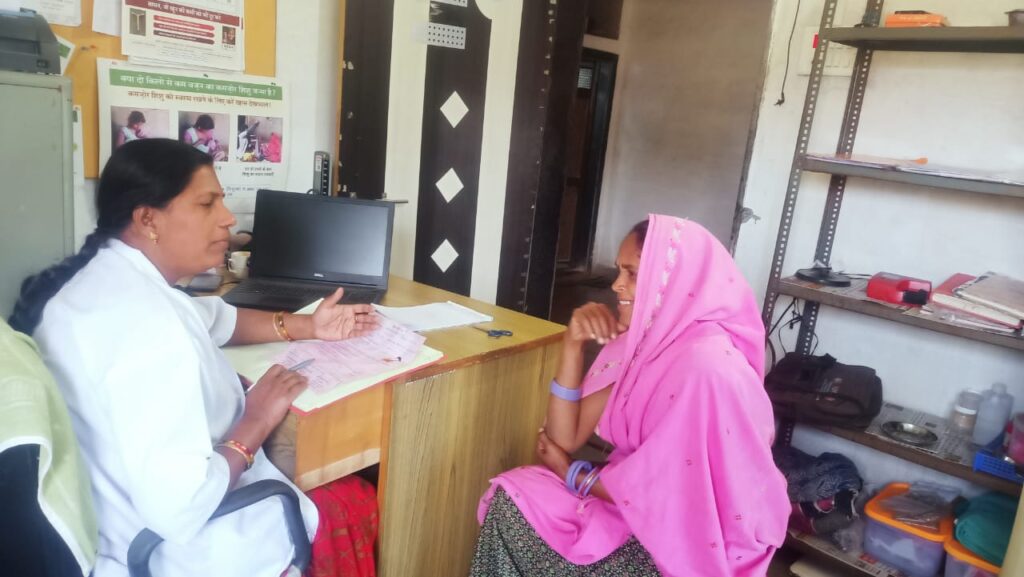
In June 2016, ARTH launched “Mukti”, a long acting reversible contraceptive (LARC) for women of low economic status in a population of 200,000 in Udaipur city and in villages of three blocks of southern Rajasthan. Mukti was introduced as part of the Taruni intervention which addressed the reproductive health needs of the young women in Udaipur & Rajsamand districts. The contraceptive is a hormone impregnated intra-uterine device that however contains no copper, but instead continuously releases a calibrated dose of progesterone hormone for 7 years. Hence the Mukti “Levonorgestrel Intrauterine System” prevents pregnancy for up to 7 years. The great advantage of Mukti is that it significantly reduces menstrual blood loss, hence women suffering from heavy menstrual bleeding can get relief from the same. Besides, women adopting Mukti are expected to suffer less anemia because of reduced blood loss. Women of the area (encouraged by some doctors and other health providers) commonly but erroneously believe that heavy menstrual bleeding could be a warning of cancer. Hence after they have had children, older (30 years and above) women are often persuaded to undergo hysterectomy (removal of the uterus) for heavy bleeding. In such a situation, Mukti can offer a non-surgical solution by reducing excessive menstrual bleeding without requiring removal of the uterus. The new contraceptive is available in the commercial market for Rs 3500 to Rs 5000, which however is too high for poor communities. Hence Mukti was introduced at a subsidized cost of Rs 499 for poorer women. Mukti is available after screening by a gynecologist as required, at three ARTH Health Centres located at Lakmavaton ka Guda (district Rajsamand), Iswal and Suawaton ka Guda (district Udaipur). In order to generate awareness about Mukti, ARTH has undertaken an outdoor and print media campaign. In addition, community health entrepreneurs (Taruni Sakhis) stationed in ARTH’s intervention areas have been engaged to create awareness among the low income women. During a recent visit by 6 Members of Parliament to observe ARTH’s family planning interventions, MPs evinced considerable interest in this new contraceptive. The new contraceptive particularly addresses the need for the low income women of Southern Rajasthan, which is known for anemia related issues. We hope that as a long acting reversible contraceptive that help the low income rural and urban women to space and/or limit births, and also avert the need for hysterectomy for some women. As of March 2025, 3,372 women have got Mukti inserted at ARTH’s health centres.
Stories of Prabal Yatra – from darkness to light
Rodki Bai Gameti, 65 years old, lives with her husband Kalu in village Bagdada in (Gogunda block, Udaipur district), located approx. 5 kms away from the district road, comprises of scattered settlements on hills and mostly mud and thatch houses. She has 4 sons, who live in separate houses in the same village. Although they meet her and Kalu occasionally, they are unable to provide any support. Rodki and Kalu live in a mud and thatch house, whose electricity connection got cut because of their inability to pay the bill, at a time when the government’s electricity subsidy scheme was inactive. Because of Kalu’s old age and health issues, he is not very mobile and stays at home. This leads to Rodki having to do both household and outside work. She also has a small amount of farm land (after division from sons), on which she grows some maize, which provides meagre income. Both her and Kalu receive government old age pension and ration, which is used up in their daily expenses. With increase in age, Rodki started losing her vision, around 1 year ago. This affected her daily activities, whether it be daily chores or relieving herself at night. She was unable to visit her family members, which increased her isolation and loneliness. One of ARTH’s field worker met her one day and found out about her and Kalu’s health issues. They were informed of cataract surgery services available at no cost. She was referred to an eye hospital in Udaipur city where she received cataract surgery for one eye, cost for which was borne by ARTH and the eye hospital. For this, she had to travel approx. 50kms. Surgery significantly improved her vision, and she could conduct all her work easily. Field worker also found no light source, and provided them with a solar lamp. This helped her and Kalu to move in and around the house even after dark. She also received eye surgery for her other eye 6 months later. Kalu also received cataract surgery in one eye and a walking stick to help him move around. Both are part of the village’s Prabal Yatra Manch – a mutual support platform for older persons to enable healthy ageing. They both attend the Manch’s monthly meetings which helps them remain keep in touch with other older persons. As an active member of the Manch who attends all its meetings, Rodki Bai has shared her experience of eye surgeries, motivating others with the same issues to seek treatment. She has also learned some hand and leg exercises in Manch meetings, and has begun doing them at home, albeit irregularly. Rodki and Kalu reside in a low-resource setting, where it is difficult to maintain health and well-being with increasing age, but ARTH through its efforts is working towards reaching out and providing them with necessary support to ensure good health. Snehal Sinha (ssinha@ccr.arth.in) & Rekha Ameta, ARTH
Fefli’s choice
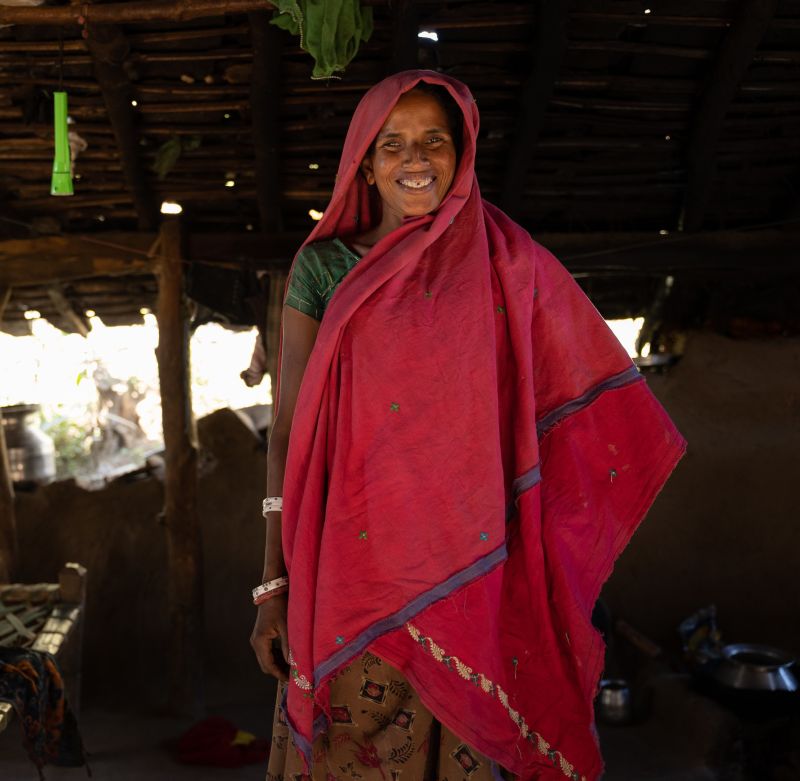
I met Fefli two years after she had a Copper-T reinserted. This is her story. Sitting on the earthen floor of her mud and thatch house amidst drying corn kernels, Fefli chuckled when I asked, “How old are you?” “Umar katri vegi? Kai tha? Aap dekhi lo apre hame hi hu mu to” (Age? Who knows? I’m right in front of you—write whatever you think.) Looking like she was in her late 40s, Fefli, mother of four, was busy with daily chores. She lived with family in a small hamlet of Kesar village in Rajsamand district, Rajasthan. Her husband, Goparam, worked at a saree shop in Surat. Each pregnancy brought increasing pressure to bear a son, from those around her, yet Fefli went on to have three daughters. Ultimately, the fourth was a boy and she was relieved. Realizing that another child would only add to her burden, she considered contraception, even though she lacked prior experience. Her husband disagreed about sterilization, worrying it might affect her ability to work. He gave her money to try out other options. She declined oral pills, fearing she might forget to take it daily. She then overheard neighbours mentioning the Copper T. Despite some misgivings, she visited the ARTH Health Center nearby. After counseling and examination, she had a Copper-T inserted for Rs 200. There was some abdominal pain and vaginal discharge that subsided after a month. “I liked the Copper-T. I didn’t face a problem — periods came on time and blood was flushed out each month. It felt good”. Having heard myths that lack of periods caused blood to accumulate in the body, the regular periods reassured her. Unlike sterilization, getting a Copper-T didn’t require her to rest or take time off from her demanding daily schedule. She continued with household chores without interruption. Years went by and Fefli hardly thought of contraception—she didn’t need to. Ten years later, she returned to the ARTH Health Centre. When the nurse-midwife suggested she could opt for another method, she was resolute about wanting another Copper T. “Husbands stay away from home for work, visit occasionally. So we have to take care of the children ourselves”. Action Research and Training for Health (ARTH) introduced the “Ten year Copper-T” (TCu 380A) in 1998 at a time when the government programme provided only the three year Copper-T or TCu 200B, and “Mukti” (hormonal IUD) in 2016, both at nominal rates. Since then, ARTH facilities have provided 2,840 Copper and 3,257 hormonal IUDs in southern Rajasthan. About 75 women have returned to have their Copper or hormonal IUD reinserted after full duration of use. There is a definite role for intrauterine devices in enabling low cost, long-term, non-surgical contraception in rural India, for the large fraction of women who do not wish to undergo sterilization. Gunjan Khorgade (gk@ccr.arth.in), ARTH
ARTH Foundation Day 2024: 27 Years of Commitment”
ARTH Foundation Day 2024: 27 Years of Commitment” ARTH celebrated its Foundation Day on 12th November, 2024 having completed 27 years of working. The event brought together ARTH’s team, including office staff, field workers, clinic staff, and board members to reflect on the organisation’s journey and reaffirm its commitment to its mission. Mr. Rajiv Khandelwal (co-founder, Aajeevika Bureau) and Dr. Pavitra Mohan (ARTH Board member) were invited as guests to share their views with everyone present. To read the event report, click here