
Gaon Pas” : Village pregnancy advisory services (2007-2010)

“Gaon Pas” : Village pregnancy advisory services (2007-2010) In July 2007, ARTH introduced village level pregnancy advisory services. This effort utilised the potential of non-medical persons (ASHAs) to increase awareness of and access to reproductive health services to enable women to better manage their own fertility. The key components of the initiative were: Click here for detailed information
Copper-T 380A as an alternative to female sterilization (1999-2004)

One of ARTH’s successful innovations has been the introduction of Copper-T 380A (the “ten year Copper-T”) in the community. ARTH undertook social marketing of 10 year Copper-T as a reversible alternative to sterilization. The Ten year Copper-T is being offered since July 1998, by the gynecologists’ and nurse midwives. The intervention of 10 year Copper T questioned many of the straitjacketed assumptions on adoption of family planning. Some of the key lessons were :
Self-help groups for improving RCH (2003 – 2008)

In 2003, ARTH formed women self-help groups, with the aim of organising communities for improving their access to health care. ARTH formed a total of 105 SHGs in the field area. Using SHGs’ social network as a community health platform, ARTH attempted to enhance people’s access to health care. 5 key strategies to support health care through SHGs were used:
ARTH launches Mukti (2016 onwards)
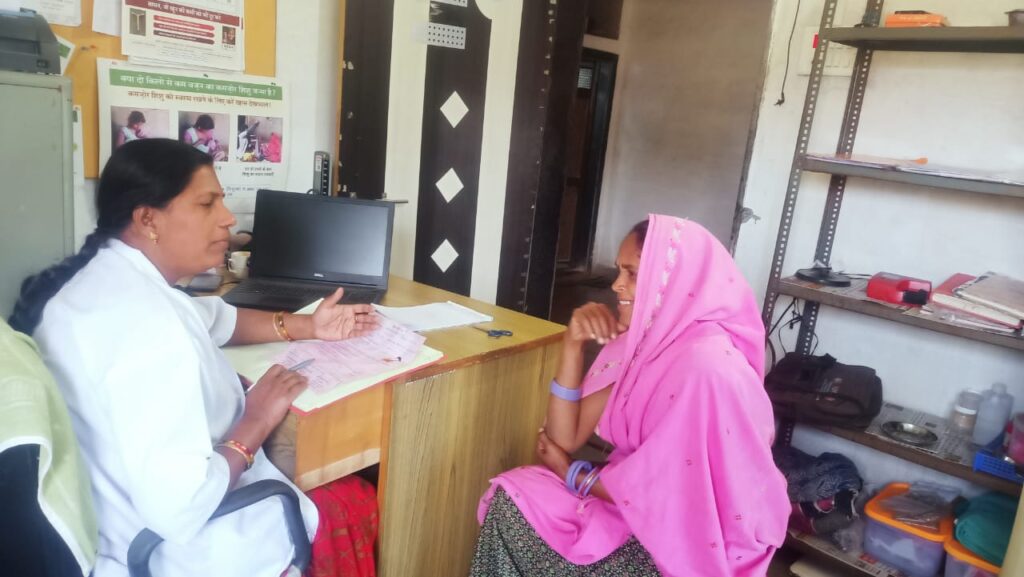
In June 2016, ARTH launched “Mukti”, a long acting reversible contraceptive (LARC) for women of low economic status in a population of 200,000 in Udaipur city and in villages of three blocks of southern Rajasthan. Mukti was introduced as part of the Taruni intervention which addressed the reproductive health needs of the young women in Udaipur & Rajsamand districts. The contraceptive is a hormone impregnated intra-uterine device that however contains no copper, but instead continuously releases a calibrated dose of progesterone hormone for 7 years. Hence the Mukti “Levonorgestrel Intrauterine System” prevents pregnancy for up to 7 years. The great advantage of Mukti is that it significantly reduces menstrual blood loss, hence women suffering from heavy menstrual bleeding can get relief from the same. Besides, women adopting Mukti are expected to suffer less anemia because of reduced blood loss. Women of the area (encouraged by some doctors and other health providers) commonly but erroneously believe that heavy menstrual bleeding could be a warning of cancer. Hence after they have had children, older (30 years and above) women are often persuaded to undergo hysterectomy (removal of the uterus) for heavy bleeding. In such a situation, Mukti can offer a non-surgical solution by reducing excessive menstrual bleeding without requiring removal of the uterus. The new contraceptive is available in the commercial market for Rs 3500 to Rs 5000, which however is too high for poor communities. Hence Mukti was introduced at a subsidized cost of Rs 499 for poorer women. Mukti is available after screening by a gynecologist as required, at three ARTH Health Centres located at Lakmavaton ka Guda (district Rajsamand), Iswal and Suawaton ka Guda (district Udaipur). In order to generate awareness about Mukti, ARTH has undertaken an outdoor and print media campaign. In addition, community health entrepreneurs (Taruni Sakhis) stationed in ARTH’s intervention areas have been engaged to create awareness among the low income women. During a recent visit by 6 Members of Parliament to observe ARTH’s family planning interventions, MPs evinced considerable interest in this new contraceptive. The new contraceptive particularly addresses the need for the low income women of Southern Rajasthan, which is known for anemia related issues. We hope that as a long acting reversible contraceptive that help the low income rural and urban women to space and/or limit births, and also avert the need for hysterectomy for some women. As of March 2025, 3,372 women have got Mukti inserted at ARTH’s health centres.