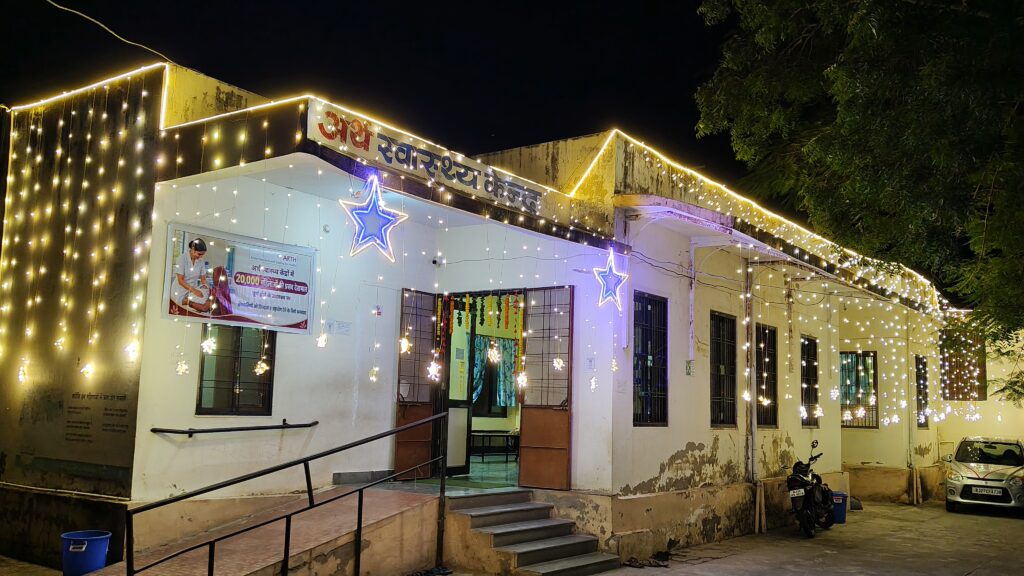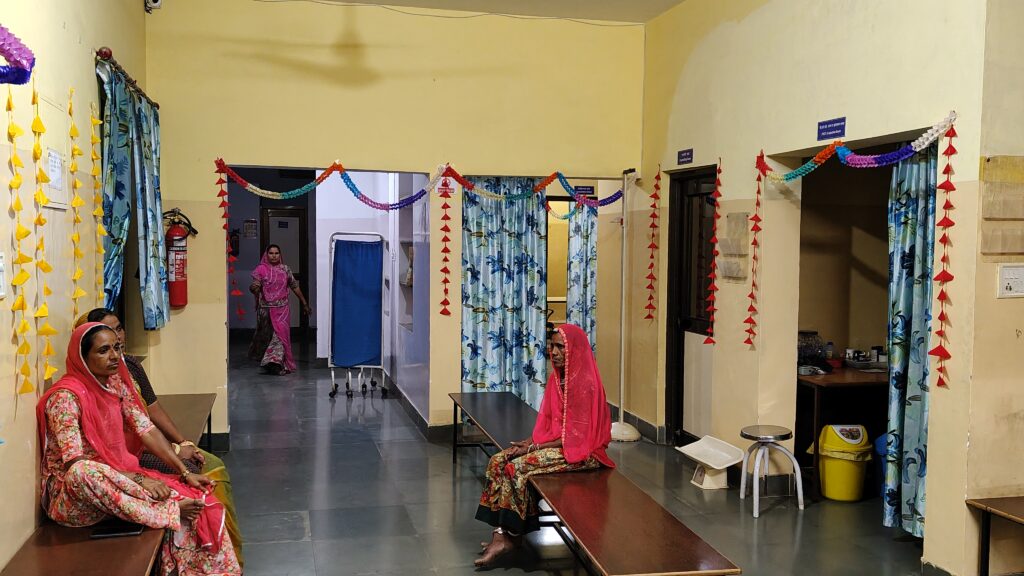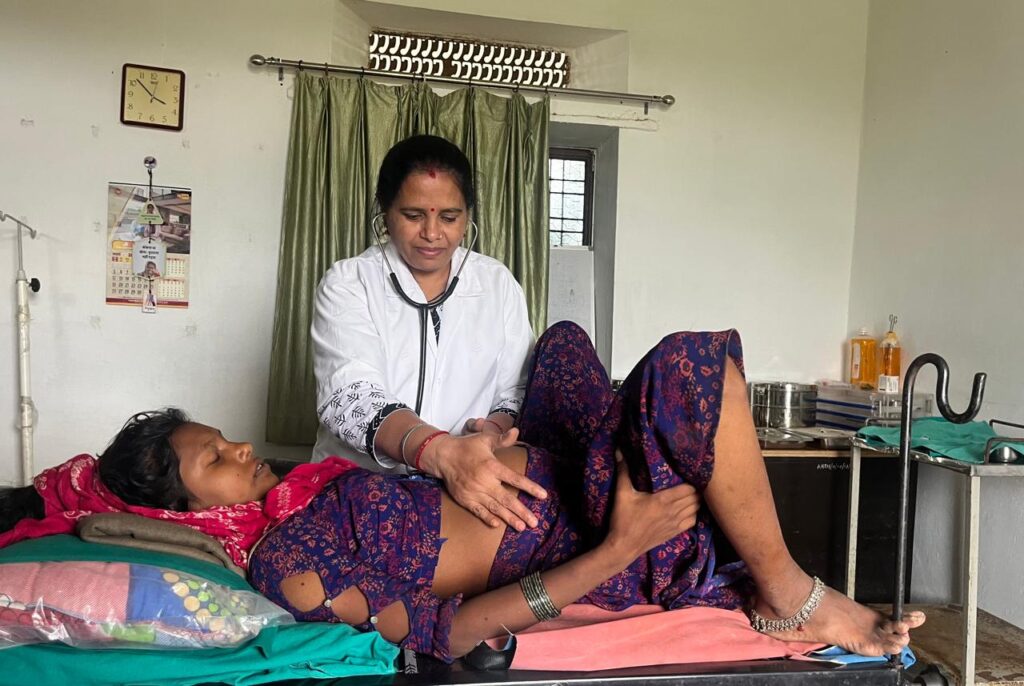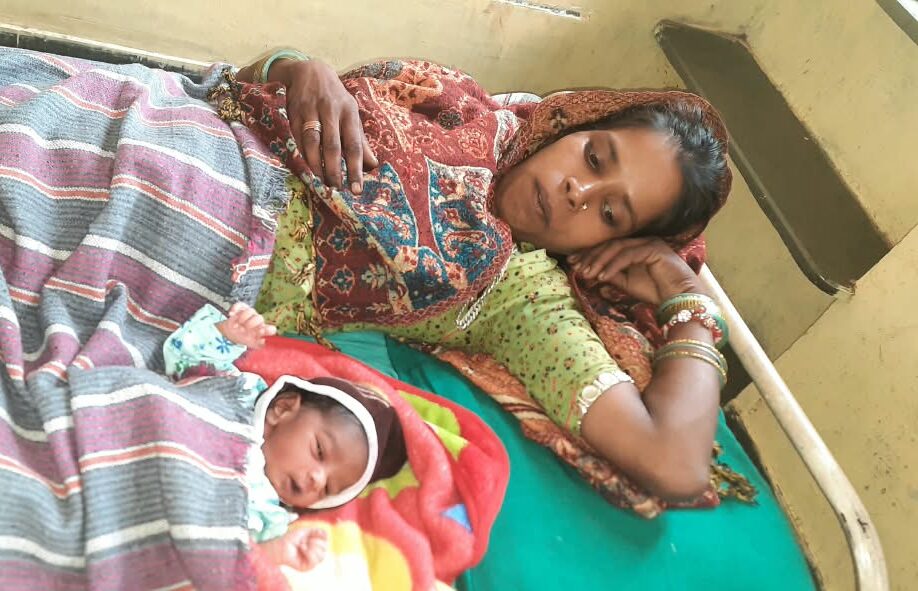
On 11 September, 2026, Rekha Kasota, a trained nurse-midwife posted at the ARTH Health Centre in Iswal village of Udaipur district commenced a night shift. At around 7pm, Dalu Gameti, a 30 year-old woman of the tribal community arrived at the facility from Ghodach village about 12 km away, accompanied by her husband and mother-in-law. Rekha examined and found her to be in labour. Rekha was assisted in the delivery room by a clinic attendant, while Dalu’s mother-in-law stood by as an observer. Dalu delivered a 2.5kg healthy girl at 8:24 pm. This was the 20,000th delivery at an ARTH Health Centre after the service commenced in November 1999.
Action Research & Training for Health (ARTH), an Udaipur based public health organization, started with a small rented health facility in Kuncholi village of Rajsamand district when home deliveries were the norm and maternal mortality rate was as high as 670 per 100,000 live births (SRS 1998). We initiated a maternal and newborn health care programme with the following objectives:
- To provide 24×7 delivery and newborn health services and daily primary care to women and children from economically weaker sections, in rural-tribal areas of southern Rajasthan
- To train, equip and empower nurse-midwives and enable them to provide safe maternal and neonatal health care services in interior areas without requiring the continuous presence of a doctor
From the beginning, our health centres have been managed by trained nurse-midwives (qualified with a GNM diploma, BSc degree, occasionally ANM certificate) with training, supervision and support by visiting doctors on a regular basis. ARTH’s response to high maternal and neonatal mortality rates was to establish 24×7 health facilities in the rural interiors and providing induction training and leadership skills to nurse-midwives based on a field-tested, local-language adaptation of WHO IMPACC guidelines of the time. These were later aligned with Government of India guidelines for Skilled Birth Attendance that were first published in 2006. We additionally introduced a structured process to enable prompt referral of those with maternal – neonatal complications (referral protocols, 24×7 consultation with seniors, transport arrangements and a helpline worker at the government district hospital in Udaipur). Over the years, midwifery skills were strengthened as part of routine care of women and newborns. The above set of interventions forms the core of ARTH’s Basic Midwifery Model (BMM). The model depends on efficient recognition and early referral of those with complications – the 20,000 deliveries attended by nurse-midwives included 1608 (8%) that were referred to the government hospital. During 2025-26, the top 5 indications for referral included severe anaemia, fetal distress, prolonged labour, breech and leaking PV. After admission, the proactive, supportive role of doctors, nurse-midwives, staff and the blood bank at Udaipur’s government Zanana hospital has been greatly responsible for ensuring positive outcomes among those referred. It is relevant to note that the BMM emerged organically in an interior rural area as a response to high MMR and NMR, and not as a response to high rates of caesarean section in urban hospitals.
Attaining this milestone of 20,000 deliveries has made 11 September a special day for the organisation, for it reflects the community’s trust in our services. When ARTH started work, a delivery would cost the family Rs300 (all inclusive). Even today, the all-inclusive cost of Rs2900 (Rs2200 for tribal communities) is nominal. We now have 3 rural health centres that function round the clock. Our senior nurse-midwives recall seeing women from multiple generations of the same family coming back to our centres for delivery care. Some travel distances of up to 30-50 km in order to access our services. We have gained their trust by remaining consistent – no matter who the person is providing care, quality has remained the same across locations and over the years. Regular service reviews, re-training and quality assurance have made this possible.
As the saying goes – the journey of a thousand miles begins with one step. Little did we realise in 1999, that 28 years later, we would be crossing 20,000!