
The Longitudinal Ageing Survey of India (LASI)1 reports that 26% of older persons (60+ years) in Rajasthan have a body mass index less than 18.5 – a sign that they are significantly underweight. We were curious to know the situation in our field area in tribal southern Rajasthan. While screening 2,460 older persons, we found that a much higher proportion, 43% were underweight. We conducted a separate qualitative review of food intake among 15 older persons and found that they were consuming just 51% of calories and 53% of protein, compared to their daily requirement.
Older persons progressively lose muscle mass as they age, and require a wide array of nutrients to maintain their health and muscle strength2. Southern Rajasthan, located along the Aravallis, has less fertile soil and agriculture is mainly rain-fed, leading to low productivity. Small scattered villages and hamlets mean that one has to travel a significant distance to buy even simple grocery items. With low levels of education, most people depend on NREGA and other wage-labour to supplement farm output. Beyond the age of 70, this income reduces to the amount of pension and any financial support they might receive from their families. Those living below the poverty line do receive 5kg of wheat from the Public Distribution System. Over time, food insecurity in conjunction with the ageing process leads to reduction in appetite, with resultant frailty and poor health outcomes3.

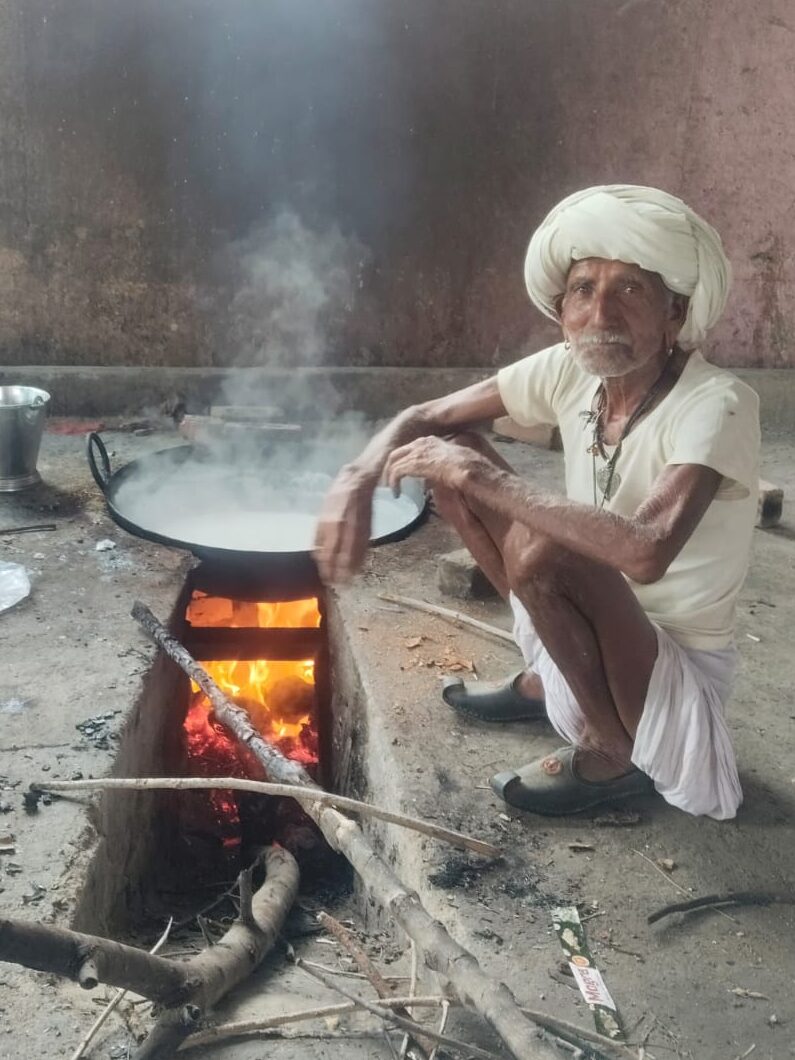
During National Nutrition Week (1-7 Sep 2025), ARTH organised group-cooking sessions in 100 villages as a part of its Prabal Yatra intervention, to initiate a conversation on maintaining nutrition with age. On the menu were simple, easy to chew meals like laapsi (sweetened broken wheat), kheer (rice pudding) and khichdi (rice, pulses and a few vegetables).These dishes provided protein and energy along with some vitamins and minerals. We demonstrated that nutritious meals could be made from locally available ingredients. Cooking and eating a meal together additionally increased social connect among older persons who tend to become isolated. While some older persons enthusiastically cooked the meal, others sang songs, played games and discussed locally available food items that could be consumed to improve health – in the words of one participant, “This way we found a reason to meet each other”.

Ensuring older persons’ access to better nutrition will require efforts by multiple stakeholders, including the government. Currently, Anganwadis and schools provide meals for pre-school and school-going children. With an ageing population, should India consider a similar arrangement for older persons living in vulnerable areas? We have begun to understand the issue of undernutrition among older persons, and will continue to work with the community to learn more. Meanwhile, even as individuals, we can do our bit to secure good nutrition for older persons in our own families and neighbourhood. We can begin by asking them what they ate, through the previous day.
– Snehal Sinha (ssinha@ccr.arth.in)
References:
1 International Institute for Population Sciences (IIPS), National Programme for Health Care of Elderly (NPHCE), MoHFW, Harvard T. H. Chan School of Public Health (HSPH) and the University of Southern California (USC) 2020. Longitudinal Ageing Study in India (LASI) Wave 1, 2017-18.
2 Rani, P.M.S. (2024). Nutritional Status of Elderly in India: A Review. In: Soletti, A.B. (eds) Contemporary Issues in Late Adulthood. Asian Perspectives on Public Health. Springer, Singapore. https://doi.org/10.1007/978-981-97-4449-7_11
3 Chaudhary, M. (2018). Association of food insecurity with frailty among older adults in India. Journal of Public Health, 26(3), 321–330. https://doi.org/10.1007/s10389-017-0866-4