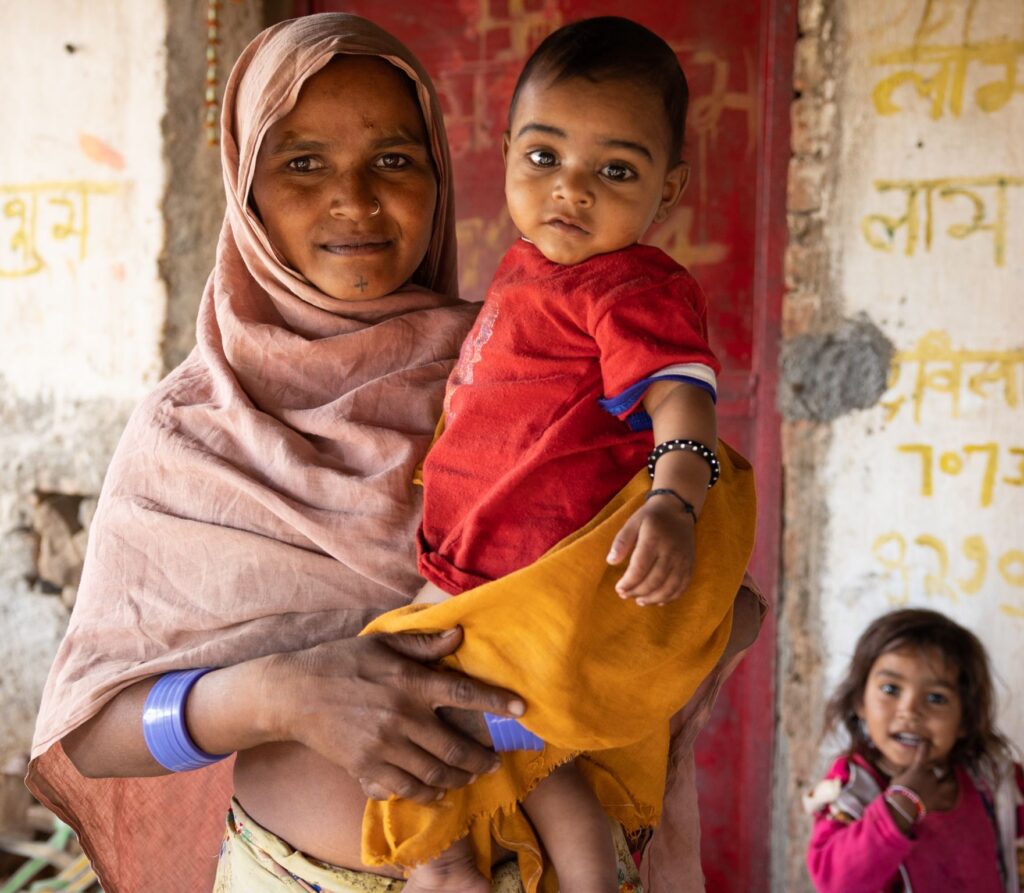
(Postpartum Care in rural Rajasthan – 1)
Twenty two year old Bhamri lived alone in a tribal village of southern Rajasthan — her in-laws had died and husband worked in the city, visiting occasionally. After the birth of a daughter, she returned to the village, and had to manage the household alone. She recovered slowly and was often tired. With much work outdoors, she couldn’t breastfeed regularly and her periods resumed within two months. Her husband’s brief visits did little to ease her workload.
A few months later, Bhamri started feeling nauseous and consulted the local village practitioner, who confirmed pregnancy and suggested that she get abortion pills from a pharmacy shop. Bhamri panicked and telephoned her husband who strongly opposed the idea. He said that she might die if she took the medicine, and so she continued the pregnancy and delivered a son when her first child was merely 15 months old. Caring for two small children drained her physically and emotionally — household chores became tedious, she’d walked a kilometre to fetch water and was often too tired to cook, and hence skipped meals. Continuous childcare left her exhausted as one baby cried while she tended to the other.
Two months later, ARTH’s field worker Meera visited Bhamri as part of the ‘Navneet’ intervention, that aims to ensure better maternal health, nutrition, contraception and mental well-being, while facilitating infant immunization, growth and development. Meera explained how her remaining healthy was vital for the babies’ well-being. She talked about exclusive breastfeeding and contraceptive options. Bhamri consulted her husband and then visited the ARTH Health Centre for a hormonal IUD. The nurse-midwife examined her as per protocol and found that she was anemic (haemoglobin 9 gm%). She provided the hormonal IUD, medication and educated her about local nutritious foods. A few months later, Bhamri’s husband mobilized the resources to take her and their children along with him to live in the city.
Postpartum maternal healthcare has lagged far behind infant care – India does not have a formal postpartum care programme that addresses women’s needs. ARTH’s Navneet intervention aims to bridge this gap by piloting a maternal and infant care intervention through the year after delivery, beginning at the birthing facility and scheduling sequential home and facility visits, and call-centre interactions. We hope that women like Bhamri would thereby make healthier recovery after childbirth.
Himani Sharma (pa.hs@arth.in)