
Impact Of Three Feeding Regimens On Recovery Of Children From Uncomplicated Severe Acute Malnutrition (SAM) In India
A Randomized Controlled Trial (2011-15)
Research Agencies: Society for Applied Studies, New Delhi, in partnership with Action Research & Training for Health (ARTH), Udaipur and Christian Medical College, Vellore
Trial monitored by: Department of Biotechnology (DBT), Indian Council of Medical Research (ICMR) & Ministry of Health & FW, Government of India
Technical oversight by: Department of Maternal-Child & Adolescent Health & Development, World Health Organization (WHO), Geneva
Ethical oversight: Institutional Ethics Committees of participating research institutions and WHO ERC
Financial Support: Bill & Melinda Gates Foundation
India has the largest number of children affected by malnutrition in the world. As per the National Family Health Survey of 2005-2006, among children under the age of five.
- 48% were stunted
- 19.8% were wasted
- 42.5% were underweight
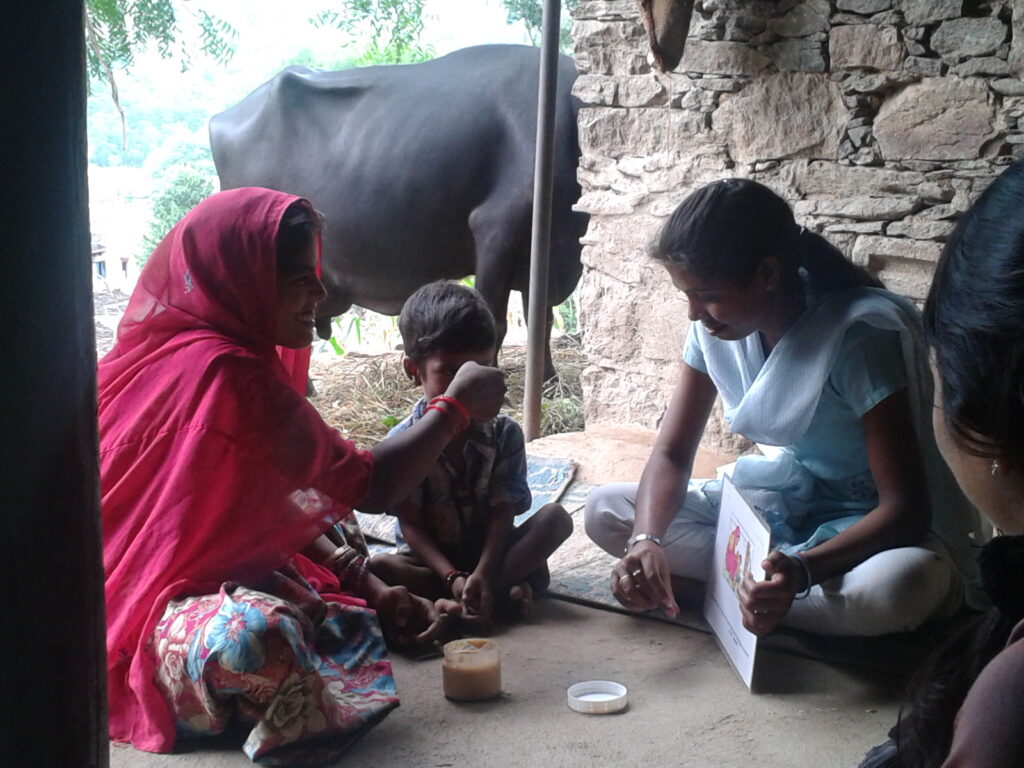
This is believed to be due to a combination of socio-economic and societal factors including poverty, food insecurity, gender inequality, disease and poor access to health and developmental services. Severe acute malnutrition is an extension of this problem and is a life threatening condition for children aged between 6-59 months.
While prevention is essential to deal with the problem of malnutrition, prompt and effective management of SAM is a public health priority for preventing deaths among the affected children.The Sampoorna project is an attempt to resolve this situation. It involves comparing 3 different feeding regimen for nutritional recovery among children suffering from uncomplicated severe acute malnutrition. The emphasis is on community and home based management of uncomplicated severe acute malnutrition.
Study Hypothesis: Ready to Use Therapeutic Food (RUTF) produced centrally or locally will be more effective compared to home prepared foods in achieving recovery 16 weeks after initiating treatment, among 6-59 month old children suffering from severe acute malnutrition (SAM)
Objective:
To evaluate the impact of 3 home-based food regimens (centrally produced RUTF, locally produced RUTF and Augmented Home Prepared Foods) on recovery of children with uncomplicated severe acute malnutrition, between 6-59 months.
Primary Outcome:
Recovery (weight for height at least -2 SD of mean) by 16 weeks after enrolment
Secondary Outcomes:
- Mortality and hospitalisations in the three feeding regimens
- Weight gain (grams/kg body wt/day)
- Time to recover (in weeks)
- Proportion of children having diarrhoea in the 4 weeks after enrolment
- Proportion of children with weight for height greater than or equal to -2 SD and absence of edema at 16 weeks after recovery
- Costs of the three feeding regimens
- Perceptions of the families, health care providers and ICDS functionaries about feasibility of using the feeding regimes
Study Sites:
Urban slums in the national capital region (Delhi),
Rural and tribal in southern Rajasthan (Udaipur and Rajsamand districts)
Rural and urban Tamil Nadu
Feeding regimens for home management of SAM:
- Centrally produced therapeutic food
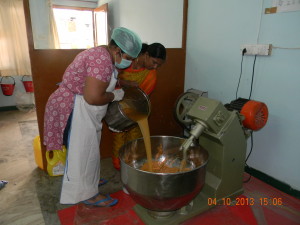
- Locally produced therapeutic food composed of peanut paste, milk solids, sugar, oil, and a micronutrient mix.
- Augmented Home-Prepared Foods + recommended micronutrient supplements
Implementation strategy:
A team of trained surveyors covered each village, enumerated all children aged 6 – 59 months, and after consent measured mid upper arm circumference (MUAC). Children with MUAC below a cut-off level of 13 cm were transported to a field clinic where anthropometry (height, weight, etc) was carried out and a doctor screened for illness. Children with uncomplicated SAM are enrolled after consent in the trial, those without SAM or with complications are treated and / or referred to hospital by the physician.
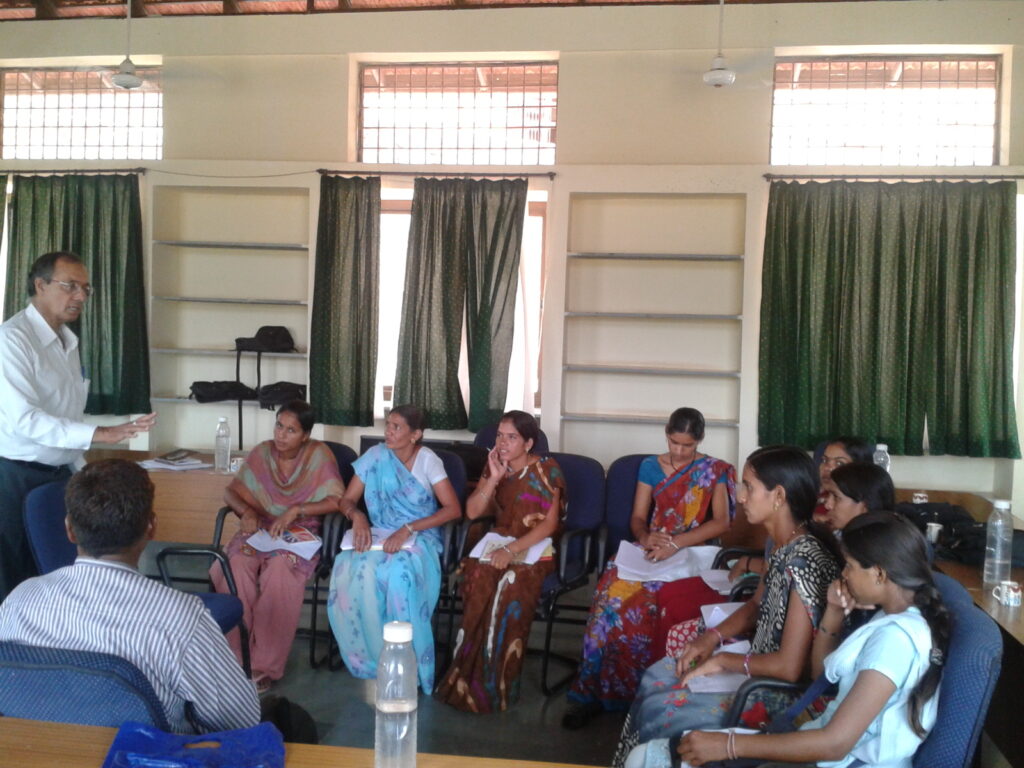
Enrolled SAM children received food supplies (RUTF or home foods as per random allocation) each week, and daily visits by a helper (a female neighbour) to help ensure regular feeding. Project staff also visited bi-weekly for counseling support and weekly for anthropometry. After recovery from SAM for 16 weeks (whichever is earlier), the child was linked to the nearest anganwadi for further management. During screening and enrolment, all children receive free treatment, transport and referral services.
Implementation of Trial:
As on 12th September 2014 a total of 287 children were enrolled. Treatment phase was completed by December 2014 while sustenance phase was completed by April 2015.
Progress at the Rajasthan site (as on 31 December 2014):
| Villages covered | 62 |
| Households covered | 18,300 |
| Population covered | 81,209 |
| 6 to 59 month old children identified | 6,555 |
| Children with arm circumference (MUAC) below 13 cm | 1,378 (21.02%) |
| Children with severe acute malnutration (SAM) identified | 360 (5.49%) |
| Total no. of SAM children enrolled | 287 (79.72%) |