India used to witness the largest number of maternal deaths in any single country, and within India, Rajasthan had among the highest maternal death rates. The early postpartum period has been recognized to be a time of heightened risk for both mother and newborn. While significant progress has occurred in developing community based approaches for promoting neonatal health, similar attention had not been paid to improving maternal health during the postpartum period.
Project Objectives:
- To reduce maternal and neonatal mortality and morbidity in the field area by providing an integrated care for mother and newborn in postpartum period to all women and newborns irrespective of place of delivery.
- To carry out evidence based advocacy for maternal — neonatal health (including safe abortion) in a decentralized manner across the seven divisions of Rajasthan state, using a gender, rights and health systems approach.
Strategy/Approach:
- Registration of all pregnant women within the ARTH field area was done through village-based workers or volunteers who motivated them to seek at least four antenatal check-ups and deliver in an institution
- All pregnant women received at least one ANC at ARTH, during which morbidities were identified, managed and recorded.
- VHWs and other key informants reported all the deliveries, irrespective of place of delivery, within three days of birth
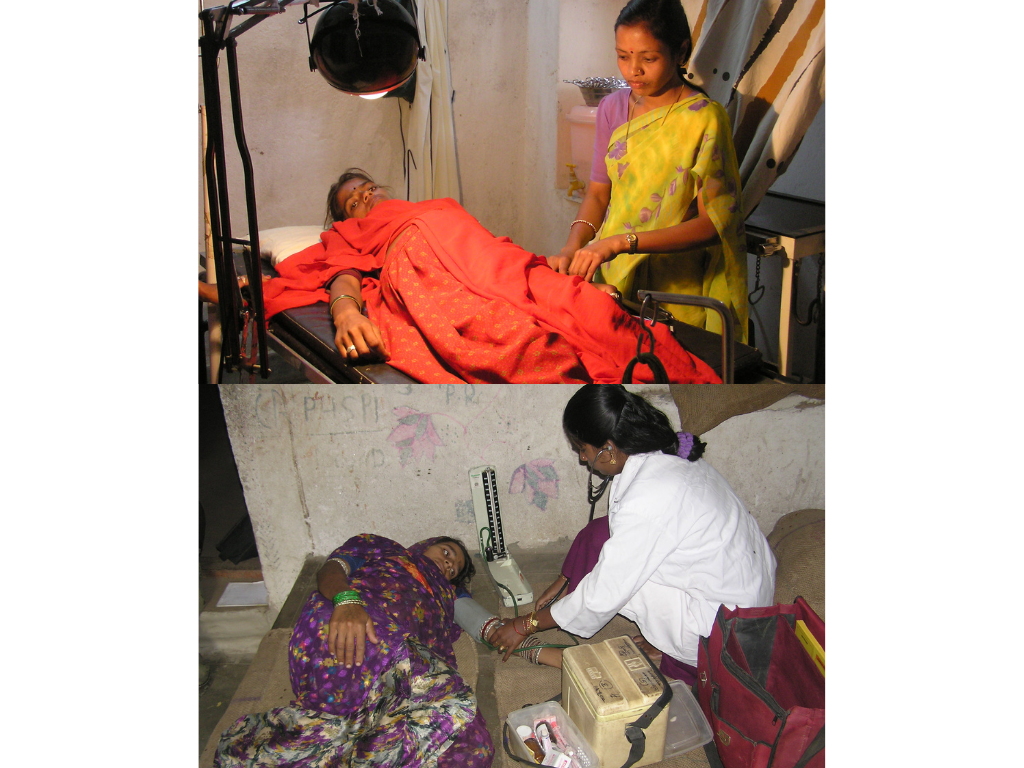
- Two home based postnatal visits were made by nurse midwives and, subsequently, 3 visits between 14 to 28 days by VHWs/ ASHAs in order to provide PNC according to a prescribed format
- Doctors and nurse midwives who attended to newborns/infants enquired about maternal morbidity and while attending to mother’s concerns, enquired about the infant’s health.
- In order to create demand for postpartum care from the family itself, educational – communication interventions were actioned through pamphlets, video shows, wall paintings etc.
- Qualitative research on maternal morbidity conditions was conducted to assess the burden and consequences of maternal morbidity in rural Rajasthan.
Progress/Outcomes:
The initial results of the study shed light on the terminology used by women to describe their postpartum morbidities and proved useful to further develop communication messages. It also showed that some life threatening morbidities continue to affect women beyond the 42 day period, in the first year after childbirth and hence it was important to provide care for one year after delivery.
The study was extended twice beyond its initial 3 years (2006-2009) in order to include further intervention time (2009-2010) as well as to complete an endline survey (2010-2011) and data analysis.
Perinatal mortality rates, as mentioned earlier, declined overall throughout the duration of this project and as the intervention continued. While there were many fluctuations up and down when examined by location of delivery, the one exception that has spiked rather than declined has been in the case of home births where the rate dropped from 77.1 in 2008 to 59.1 in 2011 and sprang up again to 104.7 in 2012.
Similarly, there was an overall decline in the neonatal mortality rate (including early and late neonatal mortality rates), but only a very small dip (around 1.5%) in the stillbirth rate in the ARTH field area over the course of the project. The timings of postnatal maternal deaths also fluctuated, with a gradual decline in early postpartum maternal death (<24 hours after delivery) by 50%. This is significant because it points to an increase in the amount of time women stayed in the birthing facilities and received more and improved care. Overall, there were positive maternal and neonatal health outcomes as a result of increased reporting of delivery by medical and local informants, and postnatal care by nurse-midwives.