
In 2012, it was estimated that 70,000-100,000 women die every year due to consequences of unsafe abortion. A majority of these deaths occur in low-income countries where induced abortion is illegal or clandestine. Unplanned pregnancy and unsafe abortion thus place a huge burden on scarce medical resources. Any improvement in comprehensive abortion care such as increased availability and acceptability of abortion services would mean important improvements for the concerned women and their families as well as for the societies at large.
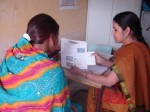
Thus, ARTH commenced a research trial in Udaipur and nearby district Rajsamand with the objective to assess the effectiveness and safety of self-assessment following a medical abortion procedure as compared to routine follow up. We aimed to describe the acceptability and accuracy of home assessments of abortion outcomes among women in both rural and urban settings in Rajasthan, India and to describe contraceptive use and compliance among women prior to and post a medical abortion. The research was carried out at four of ARTH’s rural health centres and one private hospital.
As part of the project two-prong strategy was adopted:
- To increase the access to medical abortion services in the public health systems that included ten districts of Rajasthan.
- Conducting the research studies to test the implementation of simplified medical abortion at both the state and national levels.
Under the first strategic move, two training programs were organized in which 62 providers (32 doctors & 30 senior nurse-midwives) took part from ten districts of Rajasthan. They were trained on recent updates on abortion including the legal issues, techniques and simplified procedures.
- The training resulted in enhanced understanding of medical abortion, breaking the myths of medical abortion not being a safe option. In addition to that, issues related to manual vacuum aspiration got clarified making the trainees confident of using MVA instead of D & C where the women are not eligible for medical abortion.
- Meetings were held with the state officials for introducing supplies of medical abortion pills like mifepristone and misoprostol in the list of free drugs.
Under the second strategic move, a research trial was conducted and it led to the following findings:
- Number of visits to clinics need to be reduced.
- Assessing the efficacy, safety and acceptability in the light of reduced number of visits.
- Encouraging women to self-use the misoprostol and to self-assess the outcome instead of taking the pills under medical supervision at the clinic.
- Total of 31 women were recruited in 6 clinics and randomized into two groups namely Self-Assessment & Clinic Follow Up (FU) group.
- Results confirmed that the Self-Assessment achieved the same level of efficacy, safety and acceptability as the Clinic FU group.
Further qualitative interviews with the women participating in the trial on simplified medical abortion revealed the following conclusions:
- Medical abortion is highly acceptable in both the rural and the urban populace.
- Use of misoprostol at home afforded confidentiality, lesser disruption in the discharge of daily duties at home including taking care of children.
- Majority of women under the Self-Assessment group were able to interpret the low-sensitivity pregnancy test on their own. Barring a few women, most women were able to ascertain the completion of their abortion process while a few required reassurance through the LSUP test.
- Ability to self-assess successful termination of pregnancy is a major advantage for women located in the remote areas and those who cannot afford the cost of repeated travel to a clinic and expenses thereof and the time out of their daily schedule.