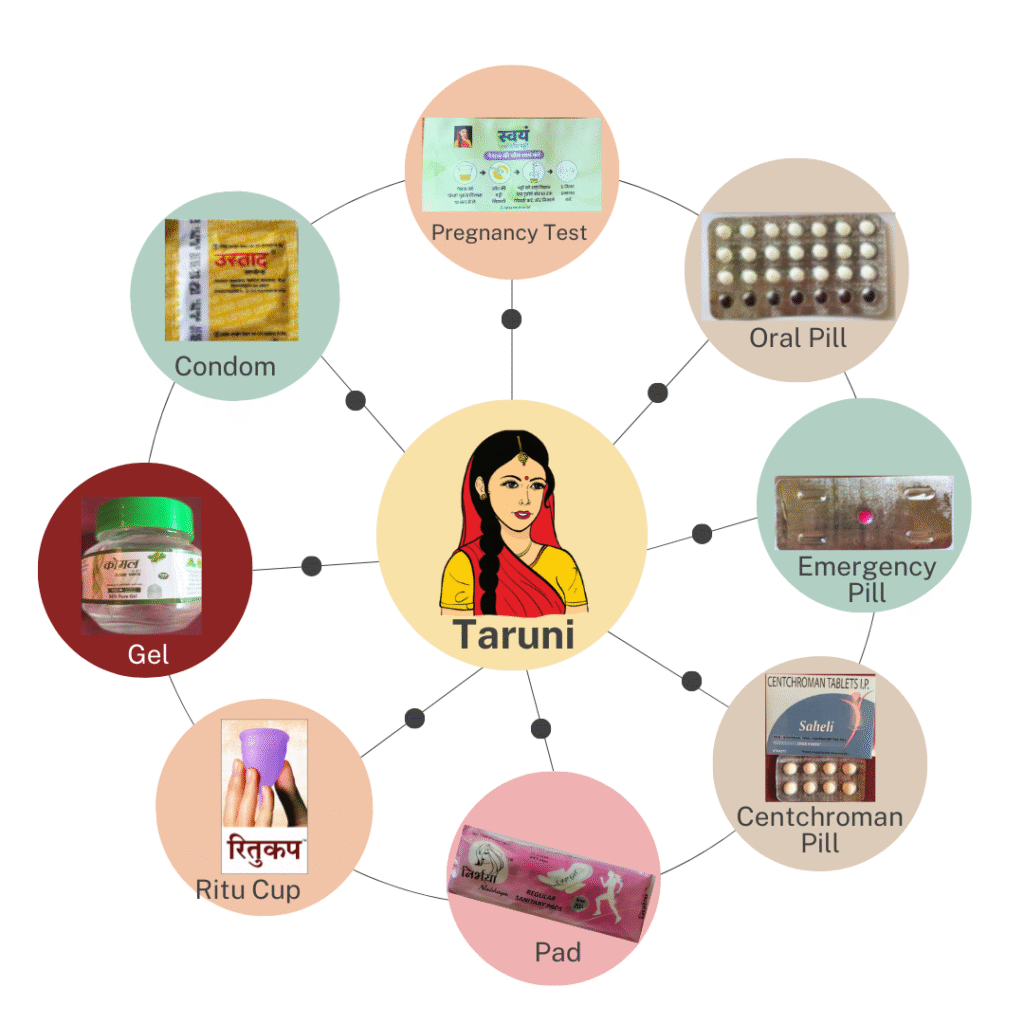
Location and population coverage: Taruni is being implemented across 8 clusters covering a population of 5,50,000 in 479 villages of Udaipur and Rajsamand districts. Each cluster covers 35,000 – 50,000 population and is mobilised by community mobilisers or Taruni Preraks, who select, train and support entrepreneurs at village level to serve 700-1000 persons.
Introduction: Lack of access among poorer young women to information, counseling and services for reproductive health underlies low use and high unmet need for contraception. This lacuna is compounded whenever they face uncertainty and anxiety about becoming pregnant. Preventing or dealing with unwanted pregnancy often entails psychological or social costs, which when coupled with the inability to seek information or calmly take informed decisions, can lead to avoidable stress and non-use of services among young women.
The Taruni intervention is being implemented by Action Research & Training for Health (ARTH) since Dec 2014. It enables women to readily self-assess their pregnancy status, seek information and commodities from neighbourhood entrepreneurs, consult a telephone helpline, and easily access RH counseling and services at primary care clinics backed by escorted referral to specialists. All these interventions aim to enable reproductive choice and greater adoption of contraceptives and other reproductive health services, on the part of young women aged up to 30 years. The 1st phase was implemented in a population of 1,80,000, the 2nd phase scaled intervention across 2 1⁄2 blocks, and the 3rd phase is being implemented in 5 blocks which utilises field experience as a platform for communicating and advocating the safeguarding of choice and reproductive rights within India’s Family Planning Program.
Activities:
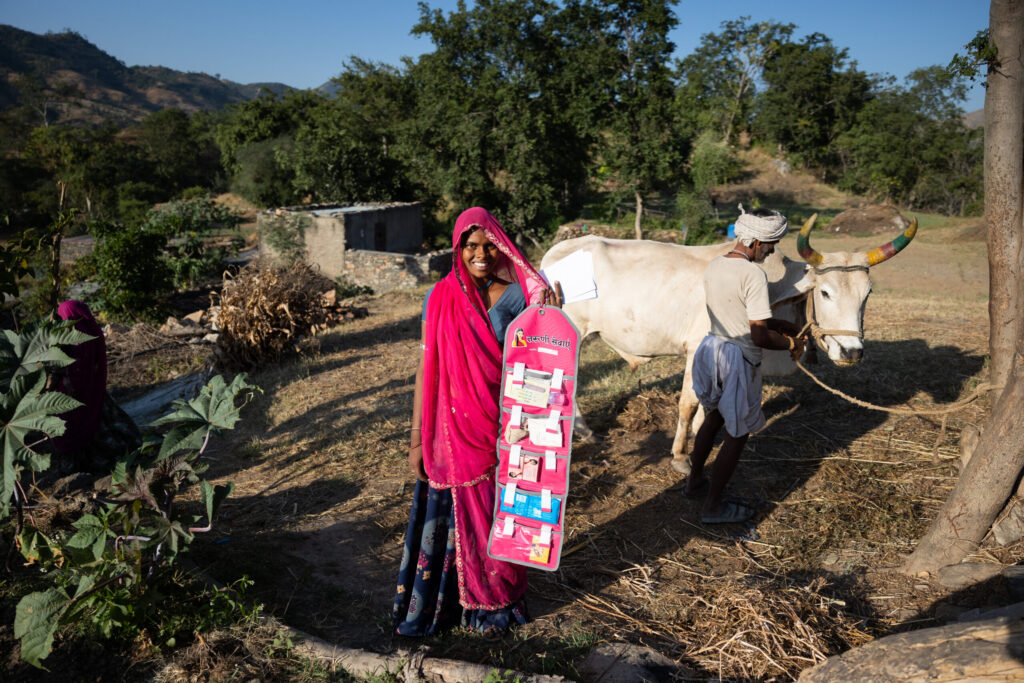
- Select one community health women entrepreneur – Taruni Sakhi (CHE), across a population of 700-800.
- The Sakhis are provided with reproductive materials such as pregnancy test kits, other contraceptive pills and reproductive health supplies through an established supply chain system of the organisation
- The CHEs provide the products to women in their community at a minimal cost. This generates additional marginal income for them
- Women call ARTH’s helpline for additional counseling and the Sakhis refer women to the nearest health center when needed.
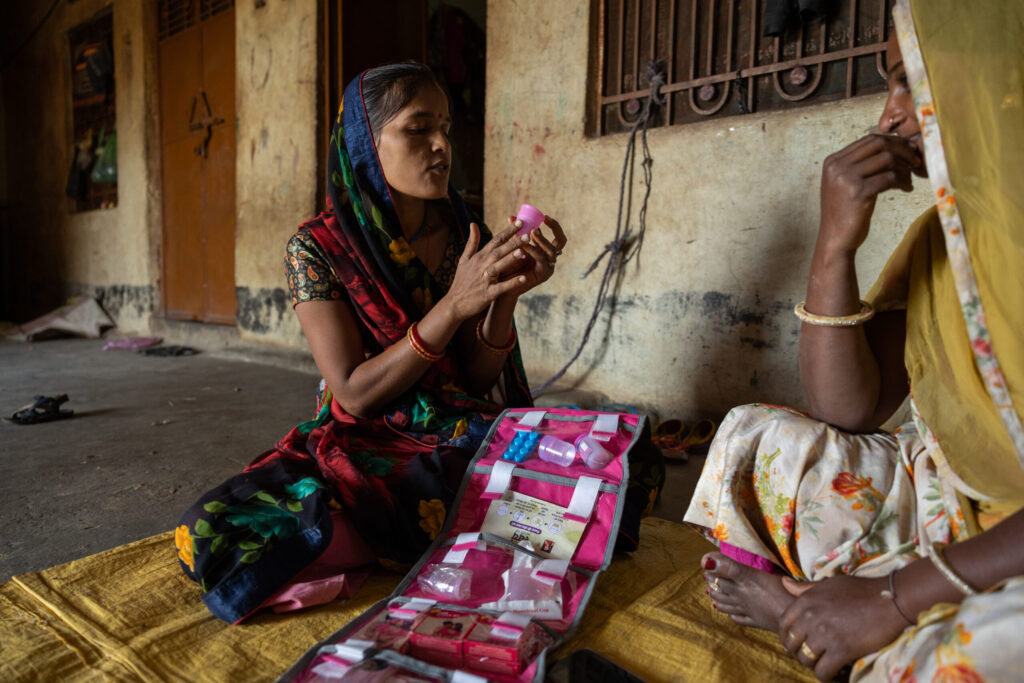
Taruni ‘dukaan’ – products available with a Taruni Sakhi