
Integrating clinical and home care for mother, infants and introducing services for mental health and care of older persons
Overview
Home Care was an initiative to provide a continuum of care extending from home to hospitals for rural – tribal women, infants, older persons and persons with psychosocial problems, in over 150,000 population in southern Rajasthan, India. Local youth (men and women) were trained and deployed as Home Care Workers to serve their community. They visited homes, surveyed, screened, identified and/ or provided supervised care using point of care equipment, and referred those needing clinical work up to clinics and hospitals.
Programme Details
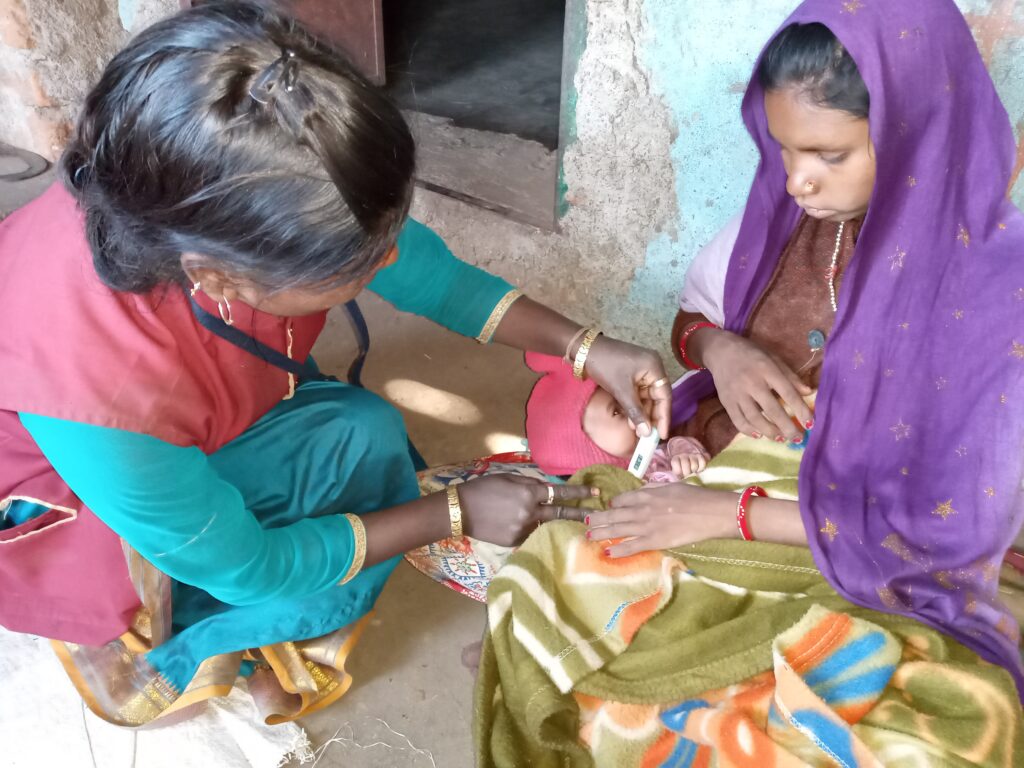
- A trained facility health educator (FHE) provided postpartum education and care after delivery. She identified vulnerable women & newborns for delivery of special care & continuous monitoring in hospital and home
- FHE conveyed delivery information to a Call & Data center, which further relayed information to ASHAs and Home Care Workers (HCWs)
- Trained HCWs visited homes of vulnerable women & newborns to follow-up, and additionally screened older persons and adults for mental health issues, in the vicinity. They promoted health & wellness through education, self-care, yoga, etc.
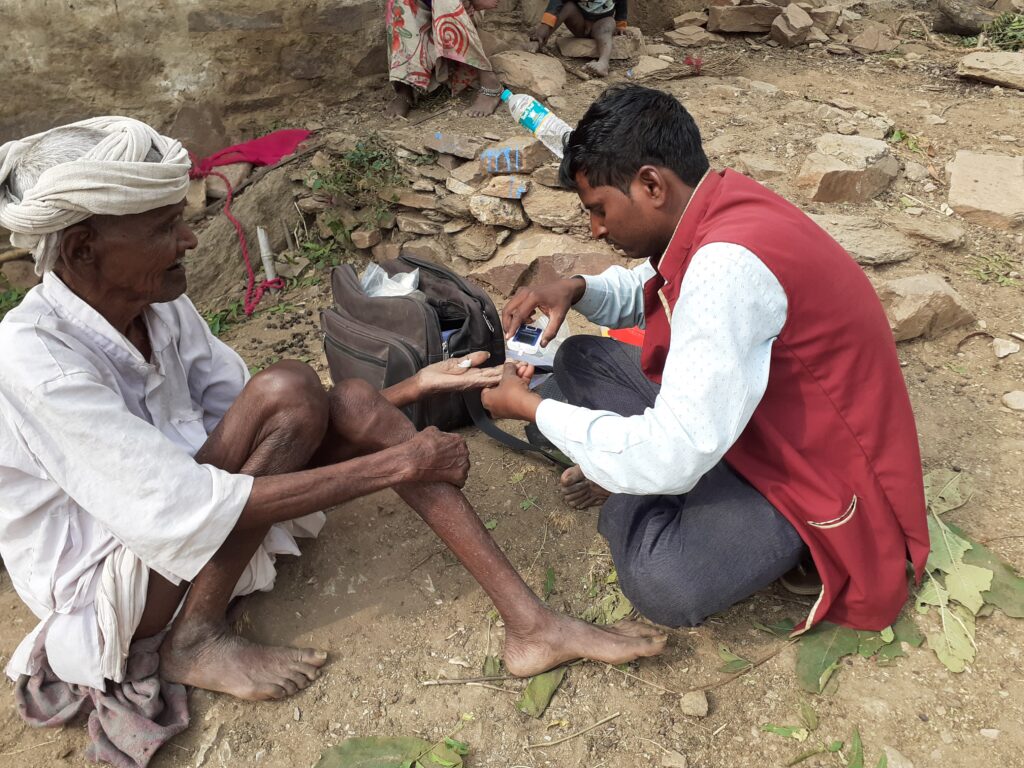
- If they identified a health condition requiring medical attention, they referred the patient to the nearest health center for diagnosis and investigations
- After diagnosis and start of treatment, HCWs made home visits to track the patient’s progress
- The Call and Data center and field supervision team monitored and supported both the FHE & HCW activities
Expected Outcomes
- Improved monitoring of mother and newborn in hospital
- Follow-up care of mothers and infants at home
- Improved health care access for mothers and infants, maternal morbidity needs addressed
- Improved nourishment of infants
- Established primary elder health services
- Established primary mental health care services
- Trained and skilled local youth in home care
Results
Over a span of three years, we screened 4,532 older persons. Of these, 3,271 (72%) were identified as having a health problem and were advised referral to a health facility for further treatment. Of those referred, 1,367 (42%) of them went for treatment at least once at an ARTH Camp, clinic, or via telemedicine.
A few older persons appeared to be willing to learn about maintenance of their functional abilities, but the larger group was looking for quick solutions to their long-term health problems. Most older persons presented with multiple morbidities and at times required further assessment at a higher centre. We referred and tried to connect them with specialists, but they were reluctant to go due to fear of COVID-19 – families believed that they would be admitted and isolated if they went to district hospitals. Some older persons opted to visit private practitioners in the city or in neighbouring towns.
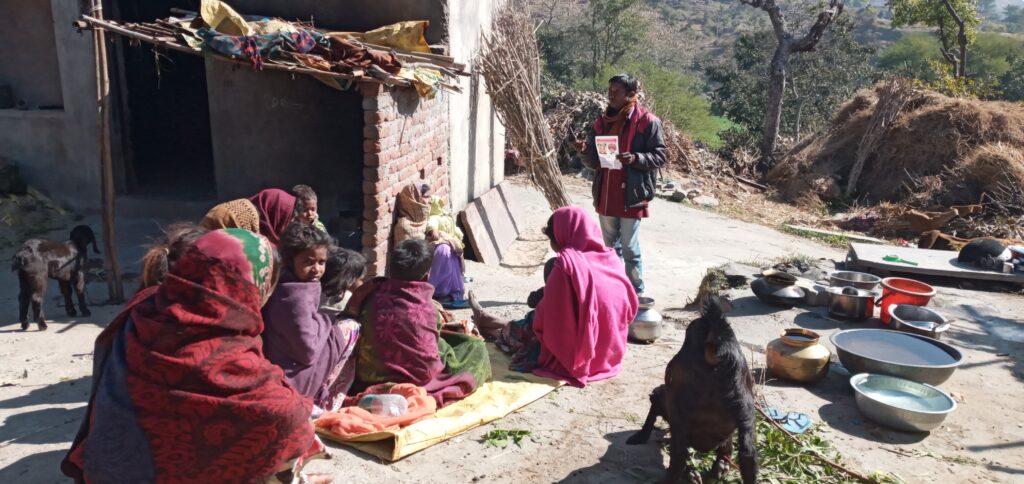
With the advent of COVID-19, we had to pivot in order to provide treatment, especially for those with chronic illnesses. Therefore we started conducting tent-based camps (which could be set up and dismantled in 20 mins), to minimise the risk of indoor infection. We also stopped group mobilisation and started reaching out to individuals, especially those living in remote areas.