Places of operation/activity:
| District | Population covered |
|---|---|
| Bharatpur | 25,48,462 |
| Chittorgarh | 15,44,338 |
| Sawai Madhopur | 13,35,551 |
Introduction:
Maternal death is defined as “The death of a woman while pregnant or within 42 days of termination of pregnancy, irrespective of the duration and the site of the pregnancy, from any cause related to or aggravated by the pregnancy or its management, but not from accidental or incidental causes. The top causes of maternal deaths are: postpartum bleeding, complications from unsafe abortion, hypertensive disorders of pregnancy, postpartum infections and obstructed labour. Most maternal deaths are avoidable, as the healthcare solutions to prevent or manage complications are well known. Improving access to antenatal care in pregnancy, skilled care during childbirth, and care and support in the weeks after childbirth will reduce maternal deaths significantly.
Situation Analysis:
Rajasthan is a state with a population of 6,85,48,437, 75% of which is rural (Census 2011), and had a high maternal mortality ratio of 255 per lakh live births (SRS 2010-12). Even though the health facilities had increased in number there was no consequent decrease in Maternal Mortality Ratio. The government system provides the bulk of maternal health services. Although the service infrastructure had improved in stages, the availability of maternal health services in rural areas remains poor because of low availability of human resources, especially midwives and clinical specialists, and their non-residence in rural areas. Various national programmes, such as the Family Planning, Child Survival and Safe Motherhood and Reproductive and Child Health, had attempted to improve maternal health; however, they had not made the desired impact either because of an earlier emphasis on ineffective strategies, slow implementation as reflected in the poor use of available resources, or lack of effective ground-level governance, as exemplified by the widespread practice of informally charging users for free services. The availability of safe abortion services is limited, resulting in a large number of informal abortion service providers and unsafe abortions, especially in rural areas. The Janani Suraksha Yojana provides an opportunity to improve maternal and neonatal health, provided the quality issues can be adequately addressed. After the implementation of Jannani Suraksha Yojna there was a 3 fold rise in institutional deliveries but MMR had not declined appreciably. The possible reason could be the poor referral system in the state. According to a review of maternal deaths in Rajasthan in 2012, 22% of maternal deaths occurred in vehicles while 65% in hospitals.
Interventions
We are refining a model of care to enable healthy ageing among vulnerable sections of the community, and are confident that robust primary care interventions to improve the health of older persons can help inform national and state policies as well as programmes.
Progress:
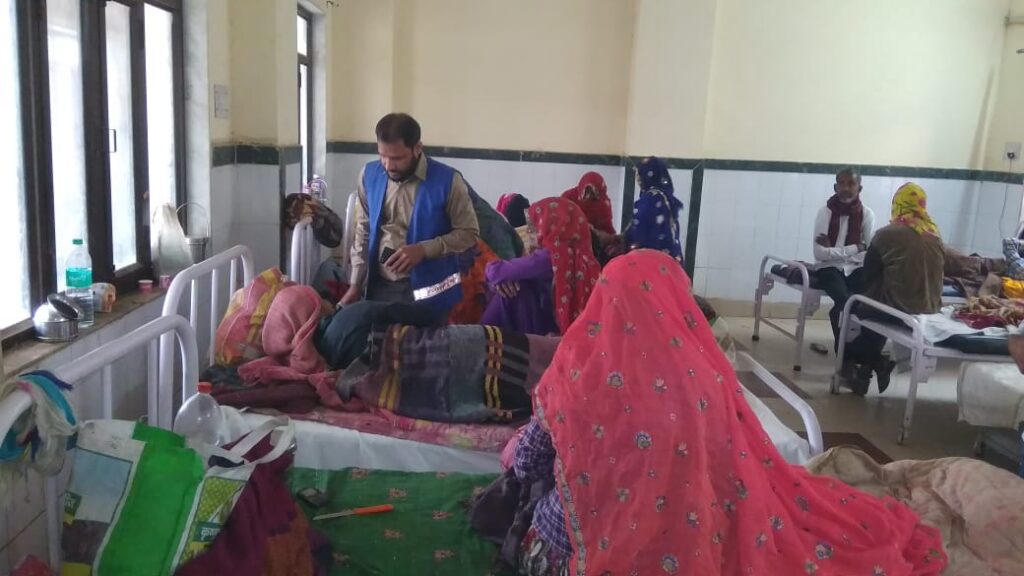
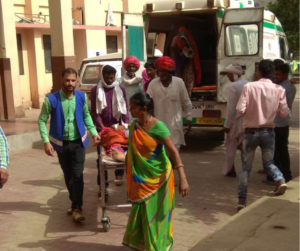
At the district level: 3 helpline workers were placed at each District Hospital to receive the women with maternal complications and guide them to appropriate medical care. During the duration of the programme, 2084 patients (Sawai Madhopur 297, Chittorgarh 769, Bharatpur 1018) were attended by the helpline workers and guided for appropriate maternal care.
Baseline Assessment of the selected (48) facilities was carried out by a team of 2 trained professionals to assess their readiness for detecting complications, immediate care and referral including transport arrangements.
At the community level:
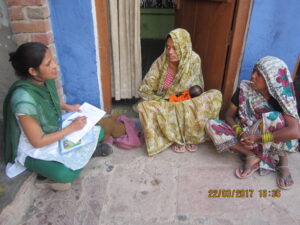
Orientation of ASHAs was carried out by 4 ARTH representatives in Chittorgarh = 11, Bharatpur = 10 and Sawai Madhopur = 8. IEC materials were distributed among the ASHAs to impart knowledge in the community regarding complications during pregnancy and some case studies from a previous project called PARIJAAT were also distributed to assess the knowledge of the ASHAs regarding maternal complications.
By the end of 31st March 2016 following are the key achievements under the project:
A total of 2,617 patients were helped through the intervention,out of which 705 were directly helped and 1,912 were helped through the four operating call centers. Of the total of 2617 patients benefited through the Sampark Intervention, 2,014 (78%) were discharged after referral care whereas a 193
(7.4%) cases were further referred to the higher healthcare facilities. There was a healthy number of patients, who were alive after the emergency maternal obstetric care, at 2,103 amounting to 80.4%.
The combined number of deaths at the time of exit for all the four intervention areas was 55 whereas the outcome after 28/42 days of completion of the intervention, the combined death figure was 108.