

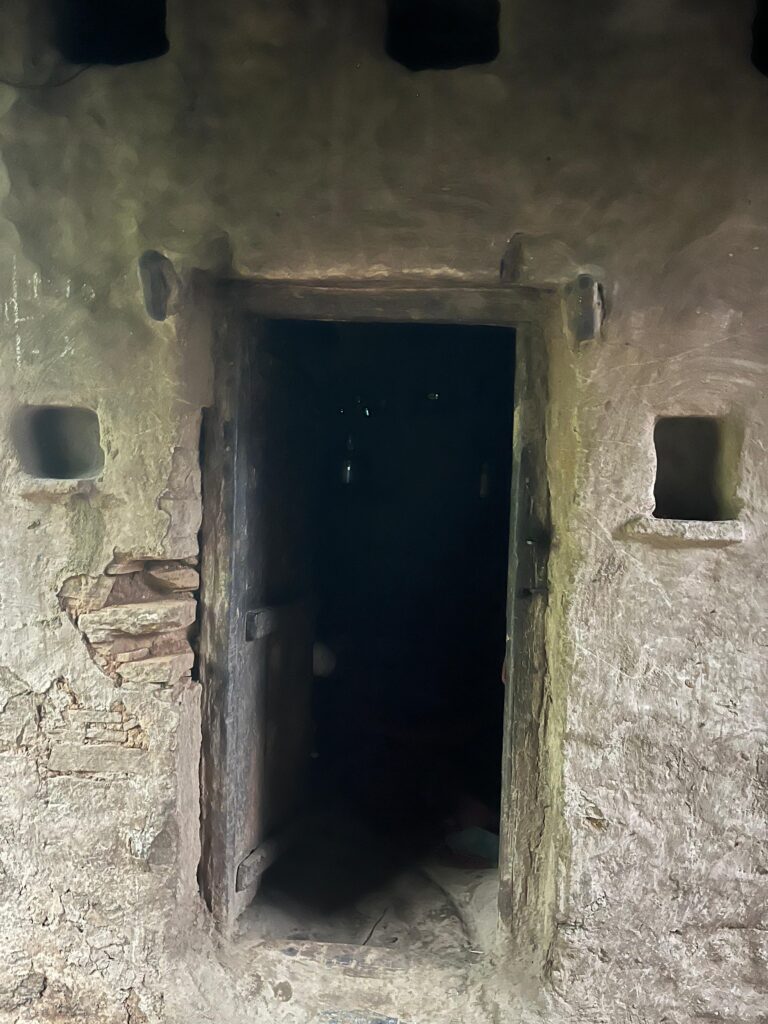
Valki, a young woman living in a remote village near Kumbhalgarh fort, Rajasthan, delivered a boy at home about a month ago. The walk to her house took a half an hour beyond the tourist trail, to a hamlet of around 25–30 families. When we met her, she was stirring chhaachh (buttermilk) and fresh corn on a chulha (clay stove) to make raab gruel, in a smoke-filled, dimly-lit room while breastfeeding her baby.

As part of the Navneet intervention for maternal and infant care in the year after delivery, an ARTH field worker assessed Valki’s mental health using the Edinburgh Postnatal Depression Scale (EPDS), adapted and translated into Mewari dialect. Valki scored 23, well above the cut-off of 13, suggesting severe depression.
As she spoke, she began to open up about the struggles weighing her down. At the end of her first pregnancy, her husband, who struggles with substance abuse, had ignored her labour pains. She was taken late next day to the hospital by her in-laws. The experience of her first delivery was so isolating and traumatic, that this time she chose to give birth at home. She told us that she had been taking contraceptive injections from ARTH’s health centre to avoid another pregnancy. But some months down the line, her husband refused to give her money to travel to get them. A year after her first delivery, she again became pregnant. “Baacha re vaate, maro iccha hi ni viyo. Phir bhi ek saal mein maaro dan chadhi gyo. Maane laagirio ki muh baccha ne chodi pihar chaali jau”, she said bitterly (I had no will or desire for this pregnancy. Even then, I missed a period. I felt like leaving the (older) child and going back to my parents).

A prospective cohort study from this very area by ARTH in 2012 reported 20% as the incidence of postpartum depression (https://doi.org/10.3329/jhpn.v30i2.11318). A larger systematic review of Indian studies similarly suggests that about one in five mothers (19%) experience depression within the first few months after delivery (https://doi.org/10.2471/BLT.17.192237). Atif et al. (2015) from Pakistan, have found that depressed mothers struggle to bond with their infants in the first year, showing reduced emotional involvement and less positive communication. Maternal depression increases the risk of poor child health including developmental delay and behavioural problems, contributing to intergenerational disadvantage (http://dx.doi.org/10.1053/j.semperi.2015.06.007). We also know that depressed mothers are less able to breastfeed successfully, thereby increasing the chances of infant malnutrition (https://doi.org/10.1590/1518-8345.2110.3035).
While maternal and child health programs often stress physical health, the mental health needs of mothers remain overlooked. A situational analysis of five low- and middle-income countries including India (2016) showed that maternal mental health (MMH) was not a priority – MMH services were largely absent, primary care workers were not trained to identify or manage MMH conditions, while mental health specialists were available only in distant referral facilities (https://doi.org/10.1186/s12913-016-1291-z).
What Valki needs most right now, is not conventional medical care – she needs counselling and supportive care, apart from a partner and family that could share her responsibilities. Her story highlights a wider reality: maternal-infant health care in India and similar countries continues to focus on physical health while mental health remains neglected. Addressing this challenge will require a systemic response that combines trained frontline workers, family support and community awareness, to ensure that postpartum care moves beyond mere survival, so that mothers and their children can truly thrive.