(Postpartum care in rural Rajasthan – 2)
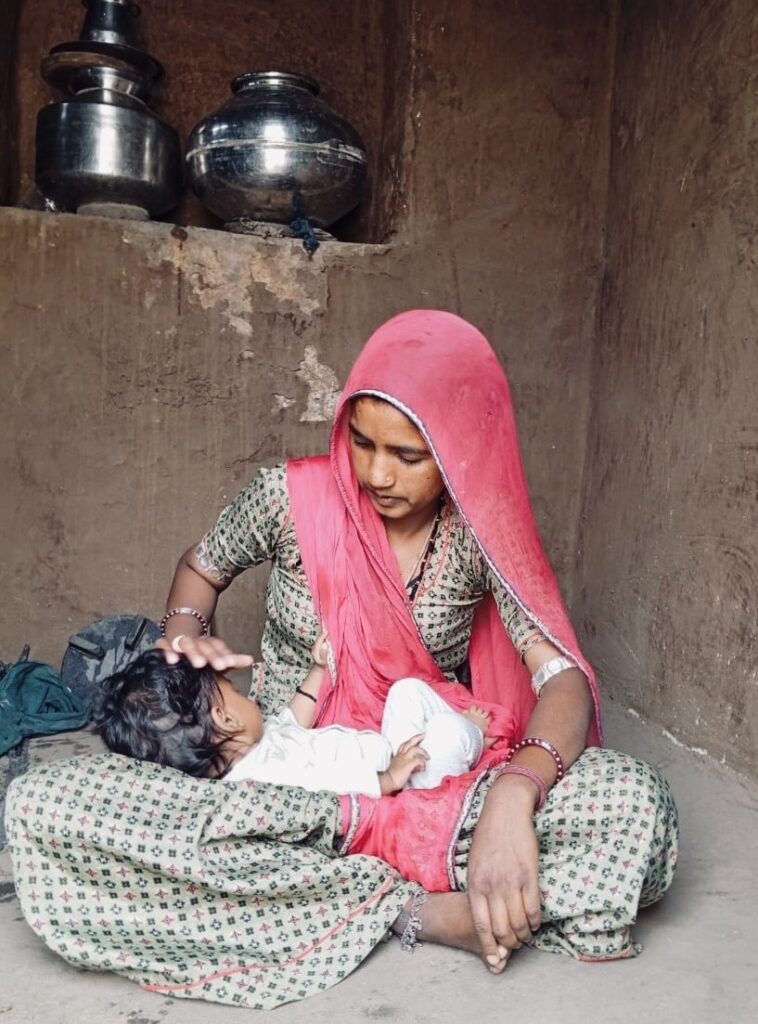
“It’s easier said than done, you know”, Nirmala (24 years) said, gently shifting the restless baby in her lap, while talking about how she has managed motherhood. She lives in Seloo village of Udaipur district with her husband and 5-month old son. Her in-laws died several years ago, so it’s just the three of them now. Her husband works as a daily wage labourer in the city, returning late each night, so household work and infant care are her sole responsibility.
I met Nirmala through ARTH’s Navneet programme, which supports maternal health, nutrition, contraception and infant care during the year after delivery in southern Rajasthan. Having delivered at the local government Community Health Centre (CHC), she stayed at her mother’s place for just a month. “My husband was alone, so I came back early”. At the time of discharge, CHC staff advised her about exclusive breastfeeding, eating healthy and taking rest. Nirmala said, “When I go out to graze the goats or collect fodder, I leave him with Bhabhiji (a neighbour). If he cries, she gives him water – what to do? If my husband is around and I’m busy, he too gives water. I know we shouldn’t, but it happens”. With a wistful smile, she said it’s near impossible to take rest. “Didi (the home-visiting ARTH health worker) said take care of yourself, but how do I do that? I have to feed the baby, graze the goats, cook, clean, wash and look after everything else. Whereis the time to rest?” Nirmala additionally wants to start working. “Before delivery, I used to do Narega (government scheme)labour or other work. Now only my husband earns, that too on some days. On other days he doesn’t,soit’s difficult”. She’s asked her younger sister to come over and stay with her. “If she’s here, I can go and work. I can’t sit at home.We need the money”.
While health workers stress the importance of rest, nutrition, breastfeeding and infant care, several new mothers lack the resources or family support to make it happen. Many mothers spend their post-partum year alone, balancing baby care and household chores with wage labour. Perhaps it’s time to consider some form of maternity benefit for those like Nirmala and her husband, who are employed in the unorganized sector – some way of averting the compelling need for a mother to leave her breastfeeding infant at home, to go out in search of wage labour.
So this Mothers’ Day, let us ask ourselves, what does post-partum care truly look like, from the standpoint of mothers themselves?
Gunjan Khorgade, (gk@ccr.arth.in)